Have you ever wondered why your expensive pneumatic tools lose power after just a few months? Or why you find rust inside your solenoid valves when you take them apart?
The culprit isn’t usually the tool itself—it’s the air feeding it.
Compressed air is inherently dirty. It’s hot, wet, and full of dust particles. If you feed this “raw” air directly into your machines, you are essentially sandblasting your equipment from the inside out.
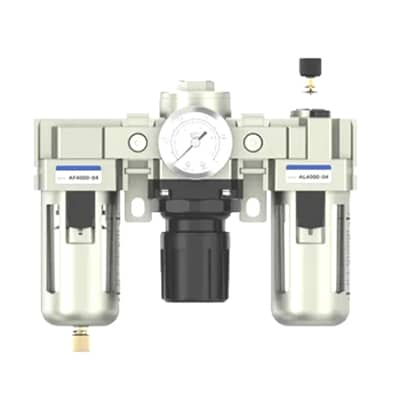
This is where the FRL Unit (Filter, Regulator, Lubricator) comes in. Often called an Air Preparation Unit, it is the “lung” of your pneumatic system. It cleans the air, controls the pressure, and lubricates the moving parts.
In this guide, we’ll break down exactly how an FRL unit works, how to choose the right size (hint: it’s not just about port size), and settle the modern controversy: Do you actually still need a lubricator in 2026?
What is an FRL Unit? (The Anatomy)
Think of an FRL unit as the dedicated “life support system” for your pneumatic machinery. While it looks like a single device, it is actually three distinct components working in a specific sequence: Filter, Regulator, and Lubricator.
Here is how each stage protects your investment:
!
1. The Filter (F): The First Line of Defense
Before air can do any work, it must be cleaned. Compressed air is naturally hot and holds a surprising amount of water vapor. As it cools in your air lines, this vapor turns into liquid water—the #1 enemy of pneumatic seals.
The Air Filter (often called a Water Trap or Moisture Separator) uses a sintered element and centrifugal force to spin the air. This flings heavy water droplets and solid particles (like rust or pipe scale) to the walls of the bowl, where they drain to the bottom.
- Standard Filtration: Most industrial applications use a 5-micron element, which removes visible dust and bulk water.
- Pro Tip: Hate manually draining the water bowl every day? Look for filters with an Auto-Drain Valve. It automatically flushes the water when the bowl gets full, saving you maintenance time and preventing water from overflowing into your tools.
2. The Regulator (R): The Traffic Cop
High pressure isn’t always better. If your pneumatic cylinder is rated for 60 PSI but your compressor is pushing 100 PSI, you are wasting energy and stressing the components unnecessarily.
The Regulator acts like a traffic cop or a reduction valve. It steps down the erratic supply pressure from the compressor to a steady, lower working pressure. This ensures your tools operate at the correct torque and speed without fluctuation, extending their lifespan significantly.
3. The Lubricator (L): The Friction Fighter
Once the air is clean and regulated, the final stage is lubrication. The Lubricator injects a fine mist of oil into the air stream. This oil travels with the air to coat the internal sliding surfaces of your tools, reducing friction and preventing corrosion.
- Note: The oil used here is special. It’s typically an ISO VG 32 mineral oil. Never use engine oil or synthetic oils that might attack polycarbonate bowls!
Wait! Does every system need a lubricator?
This is where things get controversial. In the past, everything needed oil. Today? Not necessarily. Let’s dive into the modern approach.
The “Modern” Controversy: Do You Really Need a Lubricator?
If you look at old manuals from the 1990s, they will tell you that every pneumatic system needs an FRL unit. But in 2026, blindly installing a lubricator might actually damage your new equipment.
Here is the truth: Most modern pneumatic components do NOT need external lubrication.
The “Washout” Effect
Modern solenoid valves and pneumatic cylinders are typically “Pre-lubricated” at the factory. They are packed with high-quality, long-lasting grease designed to last the entire lifespan of the component.
If you introduce a lubricator (which sprays thin mineral oil) into a pre-lubricated system, the thin oil will chemically interact with the factory grease and wash it away.
Once the factory grease is gone, your component is now addicted to the oil mist. If the lubricator runs dry or clogs—even for a few hours—the seals will run dry, overheat, and fail.
So, When Should You Use One?
To help you decide, follow this simple rule of thumb:
- You NEED a Lubricator (FRL) if:
- You are running heavy-duty Power Tools (impact wrenches, grinders, drills).
- You are using Air Motors.
- You have older, vintage equipment that requires constant oiling.
- The manufacturer specifically states “External Lubrication Required”.
- You Do NOT Need a Lubricator (FR Only) if:
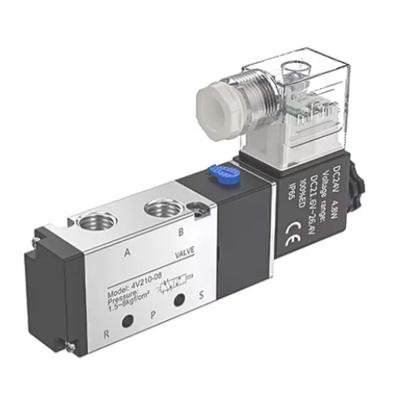
- You are using modern Solenoid Valves and Cylinders (check the datasheet for “Pre-lubricated” or “Non-lube”).
- You are using positioners or sensitive instrumentation.
- You are in an industry where oil mist contamination is a risk (e.g., painting, food packaging).
The Bottom Line: For most modern automation lines, a 2-piece FR Unit (Filter + Regulator) is the smarter, cleaner, and cheaper choice. It saves you the hassle of refilling oil and keeps your air lines clean.
How to Select the Right FRL Unit Size
Choosing an FRL unit isn’t just about matching the thread size on your compressor. If you pick the wrong one, you’ll either “choke” your tools (causing them to lose power) or create a safety hazard in your shop.
Here are the 3 critical factors you must check before clicking “Buy”:
1. Flow Rate (CFM) is King
The Mistake: “My air pipe is 1/2 inch, so I’ll just buy a 1/2 inch FRL.” The Reality: Port size does not equal flow capacity.
An FRL unit is a restriction in your air line. Every time air passes through a filter element or a regulator valve, it loses some pressure. This is called Pressure Drop.
If you select an FRL with a flow rate (measured in SCFM – Standard Cubic Feet per Minute) that is too low for your tool, the tool will “starve.”
- Example: A heavy-duty 1″ impact wrench might need 90 SCFM. If you install a cheap 1/2″ FRL rated for only 50 SCFM, the wrench will have no torque, no matter how high you crank the pressure.
Rule of Thumb: Always check the Flow Curve in the manufacturer’s datasheet. Ensure the FRL’s rated flow is at least 10-20% higher than your tool’s maximum consumption to minimize pressure drop.
2. Filtration Grade: Standard vs. Coalescing
How clean do you need your air?
- Standard (5 Micron): Removes 99% of visible dust and bulk water. Perfect for general shop air, blow guns, and cylinder operation.
- Coalescing (0.01 Micron): Removes oil aerosols and microscopic particles. Mandatory if you are doing spray painting, using breathing air systems, or protecting sensitive instrumentation.
- Warning: Coalescing filters clog faster. Only use them if necessary, and always install a standard 5-micron filter before them as a pre-filter.
3. Safety Alert: Polycarbonate vs. Metal Bowls
This is a serious safety issue that many guides ignore. FRL bowls are typically made of Polycarbonate (Plastic) or Metal (Aluminum/Zinc).
- Polycarbonate Bowls: Clear and cheap, allowing you to see the water level easily. BUT, they are incompatible with synthetic oils, thinner fumes, and compressor discharge vapors. Exposure to these chemicals can cause the plastic to crack or explode under pressure.
- Metal Bowls: Opaque but indestructible.
- Choose Metal If: Your compressor uses synthetic oil, your shop has solvent fumes in the air, or the unit is near a heat source.
- Choose Polycarbonate If: You are in a clean, standard environment and need visual inspection. Most modern PC bowls come with a metal guard for added safety.
Installation & Maintenance: Getting It Right
Even the most expensive FRL unit won’t protect your system if it’s installed backward. Here are the golden rules for installation and maintenance to keep your pneumatic system running smoothly.
!
1. Check the Arrow! (The #1 Mistake)
Every FRL unit has an Air Flow Arrow embossed on the body.
- Correct: Air must flow in the direction of the arrow (Filter -> Regulator -> Lubricator).
- Incorrect: If you install it backward, the filter won’t trap water, the regulator won’t regulate, and you’ll likely hear a loud hissing sound as air bypasses the seals.
2. Location Matters: “Point of Use”
Don’t install one giant FRL unit at your compressor and expect it to protect a tool 100 feet away.
- Why? Air cools down as it travels through pipes, creating more condensation after it leaves the compressor room.
- Best Practice: Install FRL units as close to the machine or tool as possible (within 10-15 feet). This is called “Point-of-Use” Air Preparation.
3. Maintenance Checklist
An FRL isn’t a “set it and forget it” device. Neglecting it is the fastest way to kill your tools.
- Daily: Check the water level in the filter bowl. Drain it before it touches the filter element. (Or, simply upgrade to an Auto-Drain valve and forget about it).
- Weekly: Check the oil level in the lubricator. Refill with ISO VG 32 oil only.
- Monthly: Check the pressure gauge. If the pressure drops significantly while air is flowing, your Filter Element is likely clogged and needs replacing.
Conclusion: Clean Air = Money Saved
Let’s wrap this up. An FRL unit is the cheapest insurance policy you can buy for your expensive pneumatic equipment.
- The Filter removes the water that causes rust.
- The Regulator stops you from wasting energy on artificial demand.
- The Lubricator (if you actually need one) keeps your power tools spinning smoothly.
The Final Verdict: If you are running modern automation (solenoid valves/cylinders), stick to a 2-Piece FR Unit. If you are powering heavy-duty air tools or motors, get the full 3-Piece FRL Unit.
Ready to Protect Your Equipment?
Don’t let dirty air destroy your production line.
- 👉 [Shop Our FR Units (Filter + Regulator)] – Perfect for modern automation.
- 👉 [Need Sizing Help?] – Contact our engineering team for a free consultation.
FAQ (Frequently Asked Questions)
Q: What is the correct order for an FRL unit? A: Always Filter first, then Regulator, then Lubricator. You must clean the air before regulating it, and add oil only at the very end.
Q: What oil should I use in my pneumatic lubricator? A: Use non-detergent, turbine-grade mineral oil, typically ISO VG 32 (SAE 10 weight). Never use engine oil, WD-40, or synthetic compressor oils, as they can crack polycarbonate bowls.
Q: Can I mount an FRL unit vertically? A: No. FRL units rely on gravity for the water drain and oil drip to work correctly. They must be mounted horizontally with the bowls facing down.