The 1990s called. They want their pneumatic lubricators back.
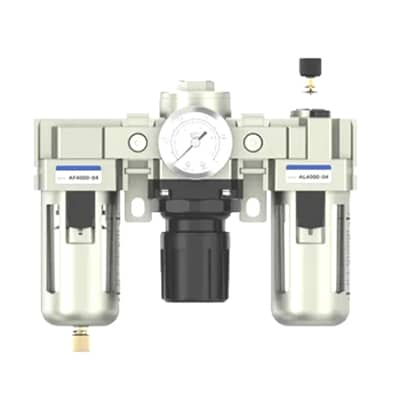
If you look at the BOM (Bill of Materials) for a machine designed thirty years ago, you will almost certainly see an FRL Unit (Filter-Regulator-Lubricator) at every air drop. It was the standard “copy-paste” solution for any pneumatic system.
But it is 2026. Materials have evolved. Manufacturing has evolved. And yet, many engineers are still specifying lubricators out of habit, believing they are adding an extra layer of protection.
Here is the uncomfortable truth: In modern automation, installing a lubricator is often not just “over-engineering”—it is actively damaging your components.
Blindly adding oil to a modern pneumatic system can wash away factory grease, increase maintenance costs, and create a messy, hazardous environment.
In this guide, we are going to break the “Zombie Habit” of specifying FRLs everywhere. We will explain the physics behind the “Washout Effect,” analyze the hidden costs of pressure drop, and give you a clear Decision Matrix on when to use a simple FR Unit and when you actually need a Lubricator.
The Hidden Danger: The “Washout Effect”
To understand why lubricators are often harmful, you first need to understand how modern pneumatic components are built.
99% of ISO cylinders and solenoid valves manufactured today are “Pre-lubricated”. Inside the factory, the seals (typically NBR or Polyurethane) are packed with a high-performance Synthetic Grease. This grease is designed to stay in place and provide friction reduction for millions of cycles—often the entire lifespan of the component.
Here is what happens when you introduce an FRL Lubricator:
1. The Solvent Reaction
Most pneumatic lubricators inject a mist of Mineral Oil (like ISO VG 32). Chemically, mineral oil acts as a solvent to the factory-applied synthetic grease. When the oil mist reaches the cylinder, it doesn’t “add” to the lubrication; it attacks it.
It thins out the thick factory grease, turning it into a runny sludge. Over time, the airflow flushes this sludge right out of the exhaust port. This is called the “Washout Effect”.
2. The “Addiction” Cycle
Once the factory grease is washed away, your component is now chemically dependent on the oil mist.
-
The Trap: If you let the lubricator run dry, or if the oil mist doesn’t reach the end of the line, the seals are now running on bare metal.
-
The Result: Friction spikes, heat builds up, and seals fail prematurely.
-
Engineering Rule: Once you start lubricating, you can NEVER stop. You have committed that machine to a lifetime of maintenance.
-
3. The Dreaded “Stick-Slip” Phenomenon
When seals lose their grease, they don’t just stop moving; they move erratically. Engineers call this “Stick-Slip”. The static friction (stiction) becomes much higher than the dynamic friction. The piston “sticks” at the start of the stroke, then “slips” or jumps forward violently once pressure builds up.
-
Consequence: This causes vibration, inaccurate positioning, and jerky motion that can ruin sensitive assembly processes.
The Decision Matrix: When to Use FR vs. FRL
So, should you ban lubricators entirely? No. They still have a critical place in heavy industry. But for 90% of modern automation, the answer is simpler than you think.
Use this Decision Matrix to specify the correct air preparation unit for your next project.
Scenario A: The “NO” List (Use FR Unit Only)
Recommendation: Modular FR Unit (Filter + Regulator). Why: Cleanliness, lower maintenance, and Lower Pressure Drop (removing the lubricator restriction improves flow efficiency).
-
Modern ISO Cylinders: Standard pneumatic cylinders (ISO 15552, 6432) are pre-lubricated for life.
-
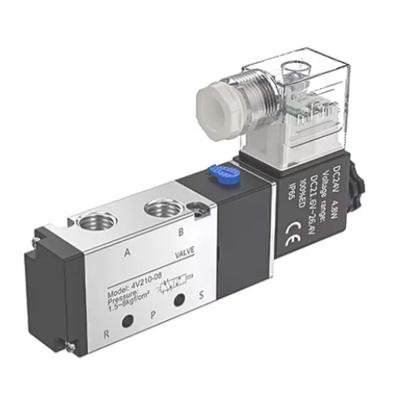
Solenoid Valves: Pilot-operated valves rely on tight tolerances and factory grease. External oil can cause sticking.
-
Linear Guides & Grippers: These precise components often have very specific lubrication requirements that mineral oil mist cannot meet.
-
Clean Industries: Food & Beverage, Pharmaceuticals, Electronics, and Painting applications where oil mist is a contamination risk.
Scenario B: The “YES” List (Use FRL Unit)
Recommendation: FRL Unit (Filter + Regulator + Lubricator). Why: High friction, high speed, or heat generation requires active cooling and lubrication.
-
Air Motors: Any device with a rotary vane air motor (drills, grinders, sanders) spins at thousands of RPM. The oil mist is essential to cool the vanes and seal the gaps.
-
Heavy Duty Power Tools: Impact wrenches and large pneumatic hammers.
-
Large Bore Cylinders (>100mm): The sheer surface area of the seal often requires supplemental oil to prevent shuddering.
-
Vintage Machinery: If you are retrofitting a machine from the 1980s, keep the lubricator. The old seals likely need it.
Pro Tip: Oil-Fog vs. Micro-Mist (Know the Difference)
If you must use a lubricator, don’t just pick the cheapest one. Engineering matters here.
-
Standard Oil-Fog Lubricator: Creates heavy oil droplets.
-
Best for: Heavy Tools. Gravity pulls the oil out of suspension quickly, so it must be mounted very close (< 5 meters) to the tool.
-
-
Micro-Mist Lubricator: Creates a super-fine aerosol (< 2 microns).
-
Best for: Complex Piping. The mist floats like smoke and can travel long distances, up vertical pipes, and through complex valve manifolds without “wetting out.”
-
Design Smart: The Modular Advantage
One of the biggest fears engineers have is “What if I’m wrong?” What if you specify a simple FR Unit, but 6 months later, the production team adds a heavy-duty air tool that does need oil?
The Solution: Modular Air Preparation Modern FRL systems (like ours) are designed like LEGO blocks.
-
Start Simple: Specify the FR Unit (Filter + Regulator) as your standard baseline. It’s cleaner, cheaper, and has a lower pressure drop.
-
Add Later: If a specific drop requires lubrication, you don’t need to rip out the plumbing. Simply unscrew the modular joiner, sandwich in a Lubricator Module, and tighten it back up.
The Better Investment: Soft Start Valves
Since you are saving money and space by removing unnecessary lubricators, where should you invest that budget? Safety. We highly recommend adding a Soft Start / Dump Valve to your FR assembly.
-
What it does: It slowly pressurizes the system at startup, preventing cylinders from slamming or whipping violently. When E-Stop is hit, it instantly dumps all downstream pressure.
-
Why it matters: It protects your expensive tooling from shock damage and keeps your operators safe—something a lubricator never did.
Conclusion: Leaner is Better
The days of “copy-pasting” FRL units onto every drawing are over. In 2026, a truly modern pneumatic system is Lean, Clean, and Specific.
-
Stop using lubricators as “insurance.” They are often doing more harm than good (Washout Effect).
-
Start specifying FR Units for standard automation.
-
Only use Micro-Mist Lubricators for specific heavy-duty or rotary tools.
By removing unnecessary oil from your air lines, you reduce maintenance costs, eliminate the risk of incompatible oil damaging seals, and improve the overall energy efficiency of your plant.
Ready to modernize your machine design?
-
👉 [Shop Modular FR Units] – The new standard for automation.