Watching a pneumatic cylinder stutter, jump, or crawl along its stroke is a nightmare for any automation engineer. This jerky motion—often referred to as “stick-slip” or stuttering—doesn’t just ruin the precision of your manufacturing process; it significantly reduces the lifespan of the cylinder’s internal seals and damages downstream mechanical components.
If your pneumatic cylinder is moving unevenly, the solution is rarely to simply increase the air pressure. In fact, doing so might make the problem worse.
In this troubleshooting guide, we will dive into the physics behind cylinder stuttering (the dreaded “stiction”), uncover the top four causes of this erratic movement, and provide actionable solutions to get your automated system running smoothly again.
Understanding the Root Cause: What is “Stiction”?
Before checking your air lines, you must understand the primary physical phenomenon causing the jerky movement: Stiction (Static Friction).
In any mechanical system, the force required to start moving an object (static friction) is much higher than the force required to keep it moving (dynamic friction).
Inside a pneumatic cylinder, the rubber piston seals press tightly against the metal barrel. When air pressure enters the cylinder, pressure builds up until it overcomes the static friction. Once the piston breaks free, the friction immediately drops. If the airflow isn’t perfectly controlled, the cylinder “jumps” forward rapidly. This sudden movement causes the internal air pressure to drop, the cylinder stops, pressure builds up again, and it jumps again.
This repetitive build-and-release cycle is what causes the crawling or jerky movement.
Top 4 Causes of Cylinder Stuttering (And How to Fix Them)
Overcoming stiction requires a delicate balance of air control, lubrication, and mechanical alignment. Here are the most common culprits behind a jumping cylinder.
1. The Wrong Flow Control Setup (Meter-In vs. Meter-Out)
This is the most common mistake made by junior technicians. When trying to control the speed of a double-acting pneumatic cylinder, they restrict the air going into the cylinder (Meter-In). Because air is highly compressible, restricting the inlet air acts like a spongy spring, leading to severe stuttering.
- The Solution: You must always use Meter-Out Pneumatic Speed Controllers. By restricting the air exhausting from the cylinder, you create a firm cushion of back-pressure. This back-pressure securely holds the piston between two compressed pockets of air, smoothly driving it forward without jumping. Ensure your speed controllers are installed correctly on the exhaust ports of the cylinder.
2. Starved Airflow from Undersized Components
If a cylinder is “starved” of air, it cannot maintain a smooth dynamic stroke. This happens when the volume of the cylinder expands faster than the incoming air can fill it.
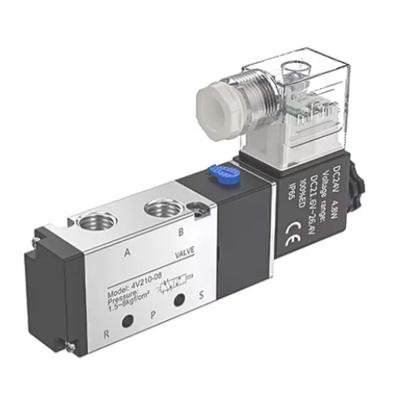
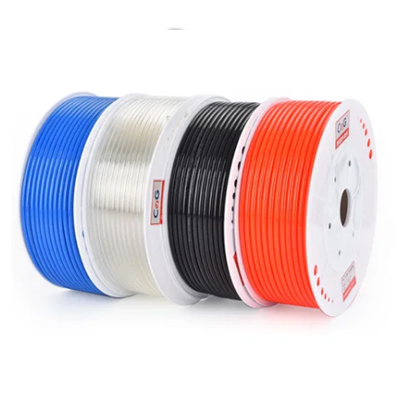
- The Solution: Check your supply lines. Are you using tubing with an internal diameter that is too small? Upgrading to high-quality, precisely extruded PU Pneumatic Tubing can resolve airflow restrictions. Furthermore, verify that your directional control valve (such as a 5/2 Way Pneumatic Solenoid Valve) has a sufficient Cv (Flow Coefficient) rating to match the bore size of your cylinder.
3. Lack of Lubrication and Worn Seals
Dry, unlubricated compressed air is the enemy of rubber seals. Without proper lubrication, the friction between the piston seal and the cylinder wall drastically increases, magnifying the “stiction” effect. Over time, this friction will completely shred the seals, causing internal air bypass.
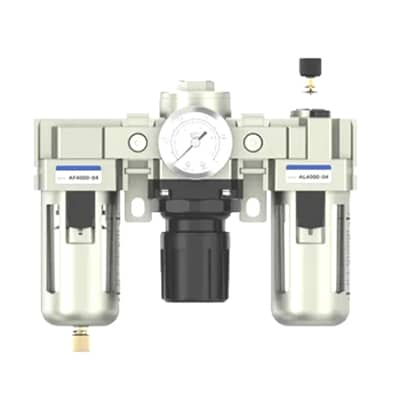
- The Solution: Install a Pneumatic FRL Unit (Filter, Regulator, Lubricator) at the main air drop for your machine. A properly adjusted lubricator will inject a microscopic mist of oil into the air stream, keeping the cylinder seals perfectly lubricated and ensuring a buttery-smooth stroke.
4. Mechanical Binding and Side Loading
Sometimes the problem isn’t pneumatic at all; it’s purely mechanical. Pneumatic cylinders are designed to push and pull in a perfectly straight line. If the load is misaligned, it exerts a “side load” on the piston rod. This pushes the internal piston aggressively against one side of the cylinder wall, causing severe metal-to-metal binding and jerky movements.
- The Solution: Disconnect the cylinder from the load and cycle it empty. If it moves smoothly, your problem is mechanical alignment. Utilize floating joints, rod clevises, or linear guide rails to absorb misalignment and eliminate side loading.
The Quick Troubleshooting Checklist
Print this quick checklist for your maintenance floor next time a cylinder starts stuttering:
- Check Flow Control: Are you using a meter-out flow control valve? Is it adjusted too tightly?
- Inspect Exhaust Ports: Check the Sintered Bronze Silencers on your solenoid valve’s exhaust ports. If they are clogged with dirt, they will create erratic back-pressure. Standard silencers easily handle typical operating pressures up to 1.0 MPa (145 PSI), but a clogged silencer will choke the system. Replace them if necessary.
- Verify Lubrication: Is your FRL unit empty? Does the air feel completely dry? Add standard ISO VG 32 pneumatic oil.
- Test for Side Loading: Disconnect the rod from the tooling. Does the stuttering stop? Realign the mounting brackets.
- Check Tubing for Kinks: Ensure your high-flexibility PU tubing hasn’t been bent past its minimum bend radius, which restricts airflow.
Stop the Stutter: Upgrade Your Pneumatic Circuit
Jerky cylinder movement is usually a symptom of a poorly balanced pneumatic circuit. By understanding the physics of stiction and implementing proper meter-out control, quality filtration, and adequately sized valves, you can eliminate erratic motion for good.
Is your automated system still struggling with erratic cylinder movement? Our engineering team is ready to assist. Contact us today for a free circuit review, or explore our premium range of Pneumatic Cylinders, Speed Controllers, and FRL Units designed for flawless, high-precision automation.
[ Contact Our Engineers for Support ] [ Browse Premium Pneumatic Accessories ]