Walk onto almost any factory floor, and you’ll likely witness a common scenario: a pneumatic tool or cylinder seems a bit sluggish, so an operator walks over to the compressor and simply cranks up the pressure. It’s human nature to think that if some air pressure is good, more must be better.
However, in the world of pneumatics, the “more is better” myth is one of the most expensive and dangerous mistakes you can make.
Running your pneumatic tools and cylinders at the incorrect air pressure doesn’t just waste energy; it drastically reduces equipment lifespan and compromises safety. In this guide, we will break down the dangers of incorrect pressure, explain the critical difference between static and dynamic pressure, and show you how to maintain the perfect balance using the right components.
The Danger of Over-Pressurization (Too High)
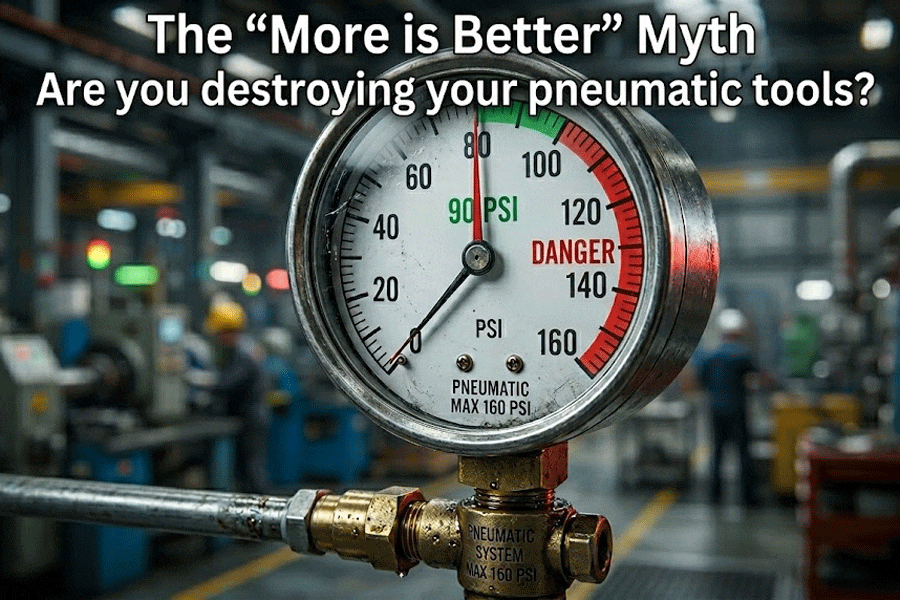
Most standard industrial pneumatic tools, actuators, and cylinders are engineered to operate optimally at 90 PSI (approx. 6.2 Bar). Supplying them with 110 or 120 PSI doesn’t make them work 20% better; it actually destroys them faster.
1. Accelerated Tool Wear & Blown Seals
Pneumatic components rely on internal O-rings, seals, and lubrication. When you exceed the manufacturer’s recommended operating pressure for pneumatic cylinders or tools, these internal seals endure massive, unintended shock loads. The result? Accelerated wear, blown seals, internal leaks, and a tool that heads to the scrap heap months or years before its time.
2. “Artificial Demand” and Wasted Energy
In compressed air audits, there is a term called “Artificial Demand.” This refers to the excess volume of air consumed simply because the system pressure is higher than necessary.
Here is the financial reality: For every 2 PSI increase in system pressure, your air compressor consumes about 1% more electricity. If your tools only need 90 PSI, but you run the system at 110 PSI, you are increasing your energy bill by roughly 10% for absolutely zero gain in productivity.
The Frustration of Under-Pressurization (Too Low)
Conversely, running tools below their required pressure leads to sluggish performance. If a pneumatic impact wrench or a sorting cylinder isn’t getting its required 90 PSI, it suffers from torque loss and slow actuation times. This leads to longer cycle times, inconsistent product quality, and frustrated operators who will inevitably try to “fix” it by cranking up the main compressor again.
Static vs. Dynamic Air Pressure: What Most People Miss
This is where many engineers and maintenance teams get tricked.
You might look at the pneumatic air pressure regulator on your wall and see it reading a perfect 90 PSI. But the moment the operator pulls the trigger on the tool or the cylinder actuates, that needle drops to 70 PSI. Why?
- Static Pressure: The pressure in the line when no air is flowing (the tool is off).
- Dynamic Pressure: The pressure in the line when air is actively flowing (the tool is running).
If there is a significant difference between the two (more than a 10-15 PSI drop), you are experiencing a severe pneumatic tool pressure drop.
This drop is rarely the fault of the air compressor. Instead, it is usually caused by bottlenecks in the “last mile” of your air system: undersized air hoses, restrictive quick-disconnect couplers, or cheap, low-flow fittings that strangle the air supply just when the tool needs it most.
How to Ensure the Perfect Pressure at the Point-of-Use
The golden rule of pneumatics is: Treat the air at the point of use, not just in the compressor room. You cannot rely on the main compressor to deliver exact pressure to a tool 100 feet away. To ensure longevity and efficiency, you need localized control. Here is how to fix it:
1. Install High-Quality FRL Units and Inline Regulators
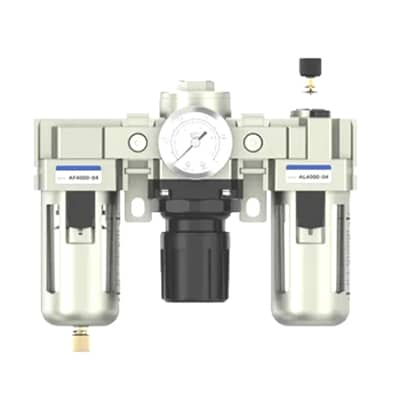
Every critical pneumatic machine or workstation should have its own air compressor FRL unit (Filter, Regulator, Lubricator) or, at the very least, a dedicated inline pneumatic air pressure regulator.
- The Regulator allows you to step down the fluctuating main line pressure (e.g., 110 PSI) to a stable, locked-in 90 PSI exactly where the tool connects.
- Look for regulators with a push-to-lock adjustment knob to prevent unauthorized tampering by operators.
2. Optimize Your Hoses and Fittings
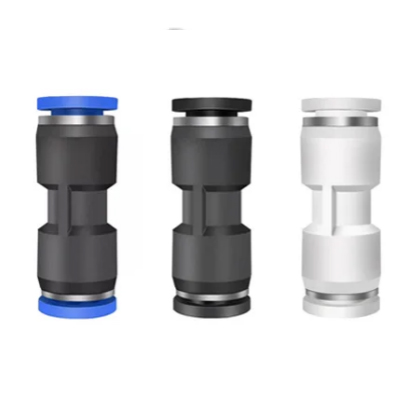
To cure the “Dynamic Pressure Drop” problem, ensure your hoses are the correct inner diameter (ID) for the tool’s air consumption rate (CFM). More importantly, upgrade to high-flow pneumatic fittings. A poorly designed fitting acts like a kink in a garden hose. Premium fittings provide a wider, smoother internal path, ensuring the dynamic pressure stays robust while the tool is running.
Quick Reference: PSI to Bar Conversion Table
For our international readers, here is a quick conversion guide for standard pneumatic pressures:
| Application | PSI (Pounds per Square Inch) | Bar |
|---|---|---|
| Delicate Pneumatic Actuators | 40 – 60 PSI | 2.8 – 4.1 Bar |
| Standard Industrial Tools & Cylinders | 90 PSI | 6.2 Bar |
| Heavy-Duty Impact Wrenches | 100 – 120 PSI | 6.9 – 8.3 Bar |
(Always check the manufacturer’s tag on your specific tool before setting the pressure.)
Conclusion
Running your pneumatic systems at the correct pressure is the easiest, most cost-effective way to extend the life of your equipment and lower your factory’s energy bills. Remember: stop cranking up the main compressor to solve local problems.
Secure Your System’s Pressure Today
Are you struggling with pressure drops or need to upgrade your point-of-use air preparation? Our precision pneumatic regulators, FRL units, and high-flow fittings are designed to deliver exact, stable pressure right where you need it. [Click here to view our catalog or consult with our pneumatic experts.]