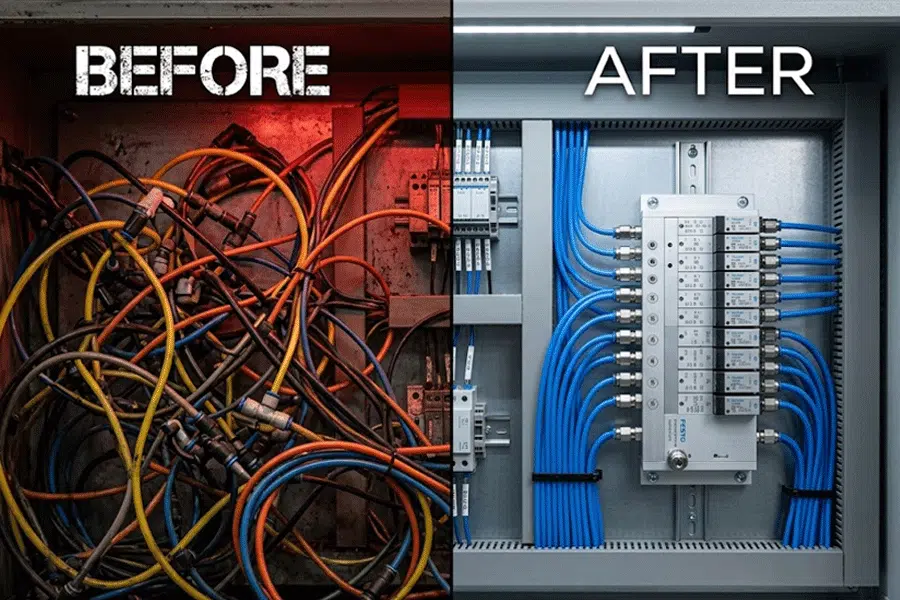
Open the control cabinet of an older or poorly designed automated machine, and you might be greeted by a terrifying sight: a chaotic, tangled web of air hoses and T-fittings that looks exactly like a bowl of spaghetti. In the engineering world, we call this “spaghetti tubing.”
Not only is this mess an eyesore, but it is also an absolute nightmare to troubleshoot, highly prone to leaks, and wastes valuable machine space. The ultimate engineering solution to this chaos is the pneumatic manifold.
In this guide, we will break down exactly what a pneumatic manifold is, how it works, and the telltale signs that it’s time to upgrade your system to a manifold-based design.
What Exactly is a Pneumatic Manifold? (The “Power Strip” Analogy)
The easiest way to understand a pneumatic manifold is to compare it to a common electrical power strip.
Imagine trying to plug five different appliances into a single wall outlet. You would need a mess of adapters and extension cords. Instead, you plug one power strip into the wall, and it provides neat, organized power to all five devices.
A pneumatic manifold block does the exact same thing for compressed air. It is a solid block—usually precision-machined from anodized aluminum—with internal passages. Instead of running a separate main air supply line to every single valve in your machine, you run one main supply line into the manifold. The manifold then internally distributes that air to multiple valves or actuators mounted on it.
4 Telltale Signs You Need to Switch to a Manifold System
If you are wondering whether your current setup needs an upgrade, look out for these four signs:
Sign 1: The “Spaghetti Tubing” Mess
If a technician has to pull apart a dozen intertwining hoses just to find one faulty valve, you are losing money on excessive downtime. A manifold system consolidates the valves into a single, neat location, allowing for clean, parallel tubing runs that are easy to trace and maintain.
Sign 2: You Have Too Many Leak Points
Every connection is a potential leak. If you are using multiple plastic T-fittings or Y-splitters to route air to different valves, you are multiplying your risk of a leak. A solid aluminum pneumatic manifold replaces all those fragile plastic splitters with a single, leak-proof internal chamber.
(If you suspect your current system is already leaking money, check out our guide on [How to Perform a Basic Air Leak Audit].)
Sign 3: Space is Running Out
Modern machine design demands a compact footprint. A row of individual solenoid valves, each with its own bulky supply fitting, takes up significant space on a DIN rail. Valve manifolds allow you to mount multiple valves tightly side-by-side on a single block, drastically reducing the overall footprint inside your control cabinet.
Sign 4: You Need Centralized Exhaust
When an individual valve shifts, it exhausts pressurized air directly into the atmosphere, creating a loud “hiss” and releasing fine oil mists. A manifold system allows you to collect the exhaust from all the attached valves and route it out through a single, large pneumatic silencer/muffler, creating a much quieter and cleaner working environment.
Two Main Types of Pneumatic Manifolds
Depending on your application, you will typically choose between two styles:
- Air Distribution Blocks (Junction Blocks): These are simple, passive blocks. Air goes into a large main port and comes out through multiple smaller ports. They are used purely to distribute air to different parts of a machine, like a hub.
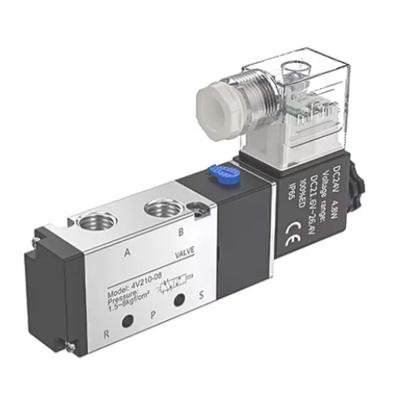
- Solenoid Valve Manifolds (Sub-bases): These are more advanced. They are specifically machined so that directional control valves (like 5/2 or 3/2 solenoid valves) bolt directly onto the surface of the block. The manifold handles the common air supply and the common exhaust for all the valves simultaneously.
Pro Tip: Always Plan for the Future (Use Blanking Plates)
Here is a secret from veteran pneumatic engineers: Always buy a manifold with more stations (ports) than you currently need. If your machine currently requires 4 valves, buy a 6-station manifold. You can cover the two unused stations with inexpensive pneumatic manifold blanking plates. A year later, if you need to add a new cylinder to the machine, you don’t have to redesign the whole pneumatic circuit. You simply unscrew the blanking plate, bolt on a new valve, and you are ready to go.
Conclusion: Clean Up Your Pneumatics
Designing with pneumatic manifolds isn’t just about making your machine look pretty. It is about engineering a system that is robust, easy to troubleshoot, space-efficient, and leak-resistant.
Ready to Upgrade Your Control Cabinet?
Say goodbye to spaghetti tubing. We offer a full range of high-quality anodized aluminum manifolds, solenoid valve assemblies, and blanking plates to streamline your next machine build. Contact us now!