As manufacturing facilities rapidly transition toward full automation, driven by the relentless push of Industry 4.0, a persistent question echoes across engineering departments and factory floors: Are pneumatic systems obsolete? With servo motors and electric actuators dominating the headlines, it is easy to assume that traditional air-powered technology is a relic of the past. However, the reality on the ground tells a very different story. Not only is the future of pneumatics secure, but the technology is also quietly undergoing a massive revolution.
In this article, we will explore why compressed air remains the lifeblood of modern manufacturing and how smart pneumatics are bridging the gap between traditional mechanical systems and the digital demands of Industry 4.0.
The Evolution, Not the End: The Future of Pneumatics
If pneumatics were truly dying, the market data would reflect it. Yet, the global smart pneumatics market is experiencing steady, continuous growth as we move further into 2026. The key to this survival lies in evolution.
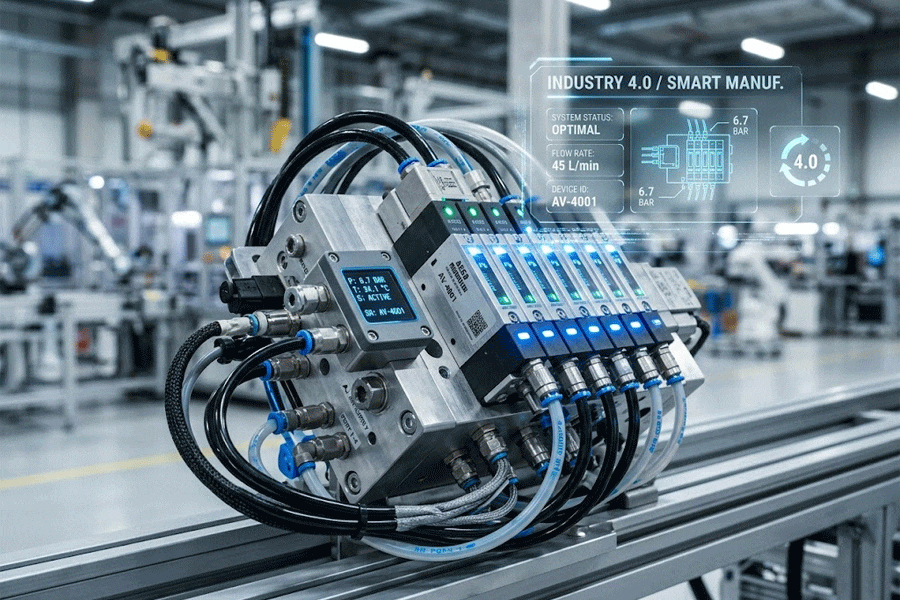
The industry is shifting from pure, “dumb” mechanical actuation to digital pneumatics. Engineers and plant managers are no longer just looking for components that move from point A to point B; they are demanding components that can communicate their status, report faults, and integrate seamlessly into the Industrial Internet of Things (IIoT). The future of pneumatics is not about replacing air with electricity, but rather giving air power a digital brain.
Pneumatic vs. Electric Actuators: Why Air Power Still Matters
When discussing upgrading production lines, the pneumatic vs electric actuators debate is inevitable. While electric systems offer exceptional precision and complex motion control, pneumatics maintain undeniable advantages that make them irreplaceable in numerous applications:
- Reliability in Harsh Environments: In dusty environments, damp conditions, or explosive atmospheres (such as flour mills or chemical plants), pneumatic systems are inherently safe. There is no risk of sparking, and a slight leak won’t cause a short circuit.
- Cost-Effectiveness and Simplicity: Pneumatics offer an unmatched force-to-size ratio. An air cylinder can deliver tremendous holding force continuously without overheating, whereas an electric motor would require constant current and risk burning out. Furthermore, the initial cost of pneumatic vs electric systems heavily favors pneumatics, making them ideal for high-speed, repetitive tasks like sorting, clamping, and packaging.
Enter “Smart Pneumatics”: Bridging the Gap to Industry 4.0
The true integration of pneumatics in Industry 4.0 happens at the component level. You don’t need to reinvent the wheel; you just need to make it smarter. Here is how modern components are achieving this:
IO-Link Valve Manifolds and Digital Pressure Regulators
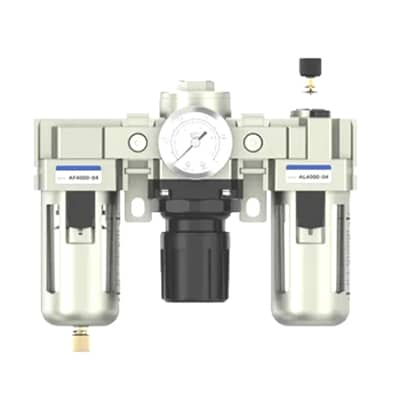
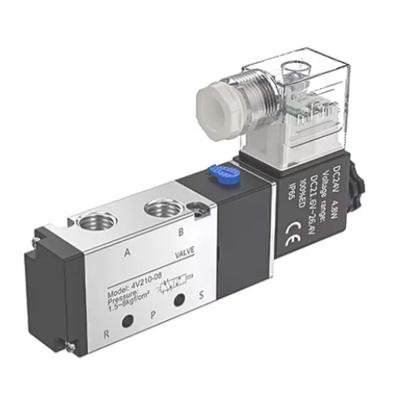
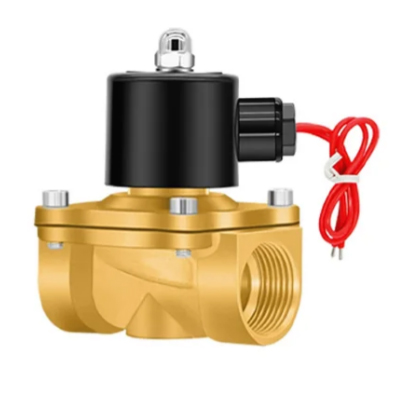
Traditionally, a solenoid valve simply opened or closed based on a PLC command. Today, an IO-Link valve manifold does much more. It acts as an intelligent node that can report back on voltage drops, temperature spikes, or the number of switching cycles it has performed. Similarly, a digital pressure regulator within a smart FRL (Filter, Regulator, Lubricator) unit can continuously monitor air supply pressure and automatically adjust it to optimal levels, preventing both under-performance and energy waste.
Sensors and Predictive Maintenance Pneumatics
The holy grail of Industry 4.0 is predictive maintenance. By utilizing a pneumatic cylinder with a position sensor or installing airflow and pressure sensors throughout the system, factories can monitor the “health” of their machines in real-time.
Instead of waiting for a machine to break down (reactive maintenance) or replacing parts on a rigid schedule (preventive maintenance), smart sensors can alert engineers that a specific cylinder’s stroke time has increased by 15 milliseconds over the past week—a clear indicator of internal seal wear. This allows for targeted maintenance during scheduled downtime, drastically reducing catastrophic failures.
Overcoming the Achilles’ Heel: Reducing Pneumatic Energy Consumption
Despite their benefits, pneumatic systems have a notorious Achilles’ heel: energy inefficiency, primarily caused by compressed air leaks. In many traditional plants, up to 30% of compressed air is lost to leaks, resulting in massive wasted electricity costs.
Therefore, a crucial part of upgrading your system is focusing on reducing pneumatic energy consumption and implementing compressed air leak detection protocols.
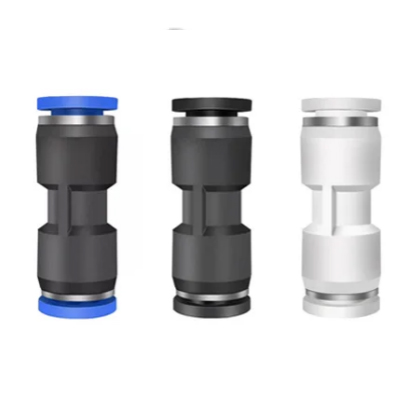
While smart sensors can help identify pressure drops, the foundational defense lies in the hardware itself. Upgrading to high-quality, leak-free pneumatic fittings and robust tubing is the most cost-effective first step. A precise, tight-sealing quick connect fitting might cost slightly more upfront, but it pays for itself exponentially by stopping the invisible energy drain at the connection points.
Conclusion: Retrofitting Your Pneumatic Systems for Tomorrow
So, are pneumatic systems obsolete? Absolutely not. They are more relevant, intelligent, and efficient than ever.
The most cost-effective strategy for factories today is not replacing everything with electric drives. Instead, the focus should be on retrofitting pneumatic systems—keeping the robust, reliable mechanical muscle of air cylinders, but upgrading the “nervous system” with smart valves, sensors, and leak-free fittings.
Are you ready to upgrade?
If you are looking to optimize your production line, reduce energy costs, or need guidance on selecting the right smart pneumatic components (from IO-Link valves to premium fittings) for your next project, our engineering team is here to help. [Click here to contact us or request a catalog.]