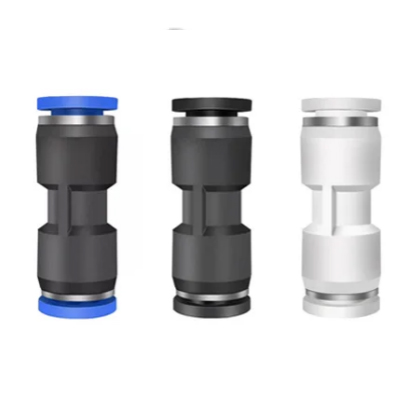
Walk into any factory, greenhouse, or automation facility, and you will see pneumatic push-to-connect fittings everywhere. They are incredibly affordable, widely available, and make connecting tubes as simple as a quick “push.”
Because of this convenience, engineers, plumbers, and DIYers constantly ask the same question: “Can I use these cheap air fittings for my water cooling lines, irrigation systems, or RO filters?”
The short answer is Yes. The long answer is Yes, but you need to understand the hidden risks to avoid a catastrophic leak six months from now.
In this guide, we will break down the engineering physics of cross-purposing pneumatic fittings for water, highlight the dangers of standard O-rings, and show you exactly how to choose the right fittings for your fluid systems.

The Physics: Why Pneumatic Push-Fittings Physically Work with Water
If you grab a standard plastic pneumatic fitting and push a water tube into it, it will hold water. Why? Because the physics of the connection are identical for gases and liquids.
- Standardized Sizing: Pneumatic fittings are designed for standard Outer Diameter (OD) tubing (e.g., 4mm, 6mm, 1/4″, 3/8″). Whether air or water flows through the tube, the stainless steel lock claws will grip the outside of the tube perfectly.
- Thread Compatibility: The threaded ends of pneumatic fittings use universal standards like BSPT, BSPP, or NPT—the exact same thread standards used in global plumbing and water systems.
Physically, they fit. But chemically and dynamically, water behaves very differently than compressed air.
The “But…”: 2 Hidden Risks of Using Standard Air Fittings for Water
Before you plumb your entire factory cooling system with off-the-shelf air fittings, you must be aware of two critical engineering hazards.
1. NBR Seals (O-Rings) vs. Chlorinated Water
Inside almost every standard pneumatic fitting is an NBR (Nitrile Rubber) O-ring. NBR is fantastic for compressed air and resisting pneumatic lubricating oils. However, NBR is highly susceptible to degradation when exposed to chlorine, ozone, and UV light. If you run municipal tap water (which contains trace amounts of chlorine to kill bacteria) through a standard air fitting, the NBR seal will slowly harden, crack, and eventually fail, leading to a slow, messy leak.
2. The Danger of Water Hammer and Pressure Spikes
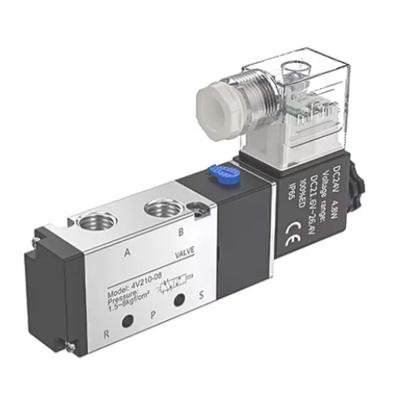
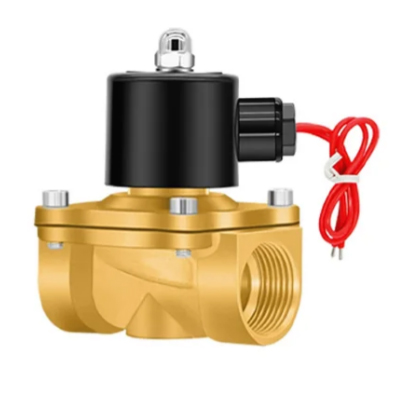
Air is a compressible fluid; water is highly incompressible. When a solenoid valve abruptly shuts off the airflow in a pneumatic system, the air compresses and absorbs the shock. When a water valve slams shut, the water cannot compress. The energy creates a massive shockwave known as a Water Hammer. Standard plastic pneumatic fittings are designed to handle steady air pressure (usually up to 1.0 MPa / 150 PSI). A severe water hammer can easily cause pressure spikes that blow the plastic housing apart or force the lock claws to release the tube.
How to Choose the Right Fittings for Your Water Application
Does this mean you can never use our pneumatic fittings for water? Absolutely not. It just means you need to match the material to the application. Here is how to specify the right components from our catalog:
Standard Plastic Fittings: Best for Cooling & Irrigation
Our standard plastic push-to-connect fittings (typically made with PBT bodies) are highly cost-effective.
- When to use them: They are perfect for non-critical, low-pressure applications like greenhouse drip irrigation, open-loop machine cooling water, or DIY fluid projects where a minor leak won’t destroy sensitive electronics.
- Limitation: Not recommended for high-pressure municipal water lines or drinking water (potable water).
Nickel-Plated Brass: The Heavy-Duty Upgrade
If you are worried about water hammer, physical impacts, or higher fluid pressures, upgrade to our Nickel-Plated Brass fittings.
- Why Nickel-Plated? Bare brass can suffer from “dezincification” (a type of corrosion that turns the brass green and brittle when exposed to water). The nickel plating provides a robust, rust-resistant barrier, making these fittings incredibly durable for industrial water circuits and injection molding cooling lines.
Stainless Steel: For RO, Food, and Harsh Environments
For the most demanding applications—such as Reverse Osmosis (RO) pure water systems, food & beverage processing, or harsh chemical washdowns—there is no substitute for our SUS316 Stainless Steel fittings. They offer ultimate corrosion resistance and zero chemical leaching.
Pro-Tip for B2B Buyers: Upgrade Your Seals (EPDM/Viton)
This is the most important secret in the industry: The body of the fitting often isn’t the problem; it’s the internal O-ring.
As a direct manufacturer, we offer OEM customization for high-volume B2B buyers. If you love the cost-effectiveness of our standard plastic or brass pneumatic fittings but need to use them for bulk water applications, we can factory-install EPDM or Viton (FKM) seals before shipping.
- EPDM: The undisputed king of water resistance. It easily handles hot water, cold water, and chlorine without degrading.
- Viton (FKM): Excellent for high temperatures and harsh chemical fluids.
By swapping the seal at the factory level, you get a highly affordable water-ready fitting without the risk of an NBR blowout.
Tubing Matters: Don’t Use PU Tubing for Water
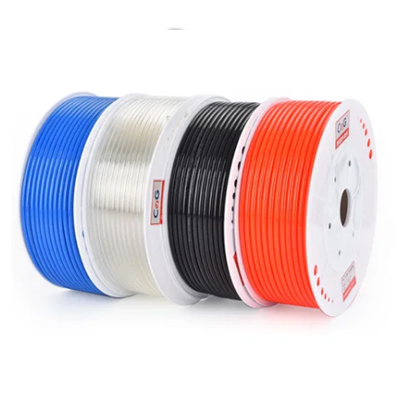
A great fitting is useless if you use the wrong tube. Standard pneumatic systems use PU (Polyurethane) tubing because of its excellent flexibility. However, PU is “hydroscopic,” meaning it absorbs water over time. If left full of water, PU tubing will swell, become sticky, and eventually burst.
For water applications, always pair your fittings with PE (Polyethylene) or PTFE (Teflon) tubing. PE tubing is rigid, highly resistant to water absorption, and is the industry standard for water filtration systems.
Conclusion: Get the Right Match for Your Fluid System
Can you use standard pneumatic fittings for water? Yes, for short-term or low-risk applications. But for industrial reliability, you must account for seal compatibility and pressure spikes.
Don’t guess with your fluid systems. Whether you need standard plastic fittings for irrigation, durable nickel-plated brass for cooling lines, or custom OEM fittings with EPDM seals for your manufacturing equipment, we have the exact solution you need.