In semiconductor wafer fabrication, biotechnology labs, and high-end medical device manufacturing, the environment is a zero-tolerance zone for contamination. In these highly controlled spaces, a single 0.1-micron particle invisible to the human eye can destroy a batch of microchips or contaminate life-saving pharmaceuticals, costing tens of thousands of dollars in scrapped products.
When designing automation systems for these environments, standard pneumatic components are a massive liability. You cannot simply wipe down a regular air cylinder and bring it into an ISO Class 4 cleanroom.
This guide explores what makes cleanroom pneumatic cylinders and low outgassing pneumatic tubing truly suitable for ultra-clean environments, and how to prevent your automation equipment from becoming a hidden source of contamination.

Understanding Cleanroom Standards: ISO 14644-1 Explained
Before sourcing parts, engineers must identify their cleanroom classification. Globally, the ISO 14644-1 standard is the benchmark.
- ISO Class 4 (formerly FS 209E Class 10): Extremely strict. Maximum of 10,000 particles (≥0.1 µm) per cubic meter. Common in semiconductor photolithography.
- ISO Class 5 (formerly FS 209E Class 100): Maximum of 100,000 particles (≥0.1 µm) per cubic meter. Common in pharmaceutical filling and precision electronics.
Your pneumatic components must be certified to operate within—and not degrade—these specific cleanliness levels.
What Makes a Pneumatic Cylinder “Cleanroom Ready”?
Beware the “Fake Cleanroom” Cylinder: Many low-cost suppliers claim their cylinders are cleanroom-ready simply because they wiped the aluminum body with alcohol and put it in a plastic bag. A true cleanroom cylinder requires fundamental internal design changes.
Here is what you must look for:
Vacuum Suction Ports (Relief Ports): Trapping Friction Particles
Every time a cylinder piston rod extends and retracts, the friction between the rod and the internal seal generates microscopic rubber dust and metallic wear particles. In a true cleanroom pneumatic cylinder, the front cap features a double-seal structure with a dedicated vacuum suction port located between the two seals. By connecting this port to a vacuum line, any friction particles generated during actuation are instantly sucked away and exhausted outside the cleanroom, preventing them from ever reaching your product.
Low-Dust Fluorine Grease: Preventing AMC and Outgassing
Solid particles aren’t the only threat. In modern semiconductor fabs, Airborne Molecular Contamination (AMC) is a critical concern. Standard lithium-based greases used in normal pneumatics will outgas (evaporate chemical molecules) into the cleanroom air, leaving a microscopic film on silicon wafers. Cleanroom cylinders must be lubricated exclusively with high-grade, low-dust Fluorine Grease. This specialty lubricant produces almost zero outgassing and generates significantly fewer particles during high-speed friction.
Stainless Steel vs. Aluminum Bodies
While anodized aluminum is acceptable for ISO Class 5, applications involving harsh chemical washdowns (like VHP sterilization in bio-pharma) should upgrade to SUS316 stainless steel bodies to prevent surface oxidation and flaking.
Selecting the Right Cleanroom Pneumatic Tubing
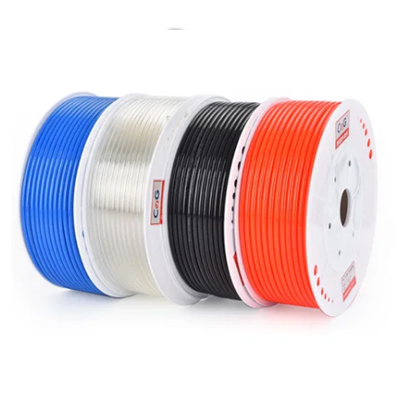
Pairing an expensive cleanroom cylinder with cheap, standard tubing defeats the purpose of your investment. Standard plastics emit plasticizers and shed particles when flexed.
Cleanroom-Grade PU (Polyurethane) for ISO Class 5+
For most robotic arms and moving automation inside ISO Class 5 to 7 environments, Clean-PU tubing is the standard. However, it must be specifically manufactured as “cleanroom grade”—meaning it is extruded from highly pure resins, washed with ultra-pure water, and verified for low particle generation during dynamic bending.
Fluoropolymer (PTFE/PFA) for Extreme Purity
For ISO Class 4 environments, semiconductor wet benches, or applications requiring absolute chemical inertness, fluoropolymer tubing (PTFE or PFA) is mandatory. PTFE offers extreme chemical resistance, zero AMC outgassing, and a naturally non-stick surface that prevents particle buildup.
Managing Pneumatic Exhaust: The #1 Cleanroom Mistake
One of the most common design failures in cleanroom automation is using standard solenoid valves equipped with bronze or plastic exhaust mufflers directly inside the clean space. When a valve shifts, it blasts a burst of compressed air out of the exhaust port. This sudden burst of air creates turbulence that destroys the cleanroom’s delicate laminar flow, blowing settled dust right back into the air. Furthermore, the exhaust air itself carries trace amounts of moisture and oil from the compressor.
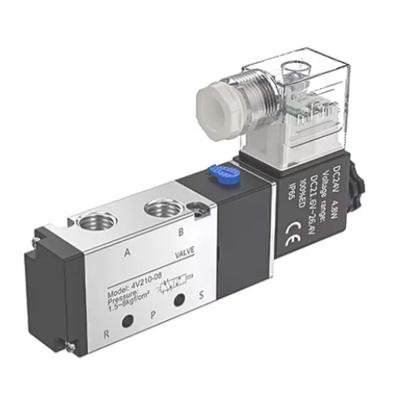
The Solution: You must use ducted exhaust solenoid valves. These manifold systems collect all exhaust air from the valves and pipe it completely out of the cleanroom via a dedicated exhaust line.
The Invisible Detail: Washing and Double-Bagging
How the product is delivered to your factory is just as important as how it is built. A reliable cleanroom compliant pneumatics supplier does not assemble parts on a standard oily workbench. High-end cleanroom cylinders and fittings undergo a strict process:
- Ultrasonic Cleaning: Parts are washed in ultra-pure water and specialized detergents.
- Cleanroom Assembly: Assembled inside an actual cleanroom environment.
- Double-Bagged Vacuum Packaging: The product is sealed in an anti-static bag, which is then sealed inside a second bag.
Why double-bagged? The facility engineer can remove the dirty outer bag in the gowning/transfer room (airlock) and carry only the pristine inner bag into the core cleanroom.
Conclusion: Sourcing Reliable Cleanroom Pneumatics
Cleanroom automation leaves no room for error. By specifying vacuum-exhaust cylinders, fluorine grease, low-outgassing tubing, and strictly managing your pneumatic exhaust, you protect your yield rates and your reputation.
Stop risking your cleanroom environment with standard industrial pneumatics. We specialize in providing high-purity, fully certified cleanroom pneumatic cylinders, low-outgassing PTFE tubing, and SUS316 stainless steel fittings. All our cleanroom products are ultrasonically washed, assembled with fluorine grease, and double-bagged for immediate safe entry into your facility.