Picture this scenario on the factory floor: An operator notices that a pneumatic cylinder is extending too fast and slamming dangerously into a delicate plastic component. To fix it, they walk over to the main air supply and dial the Pressure Regulator down from 6 bar to 2 bar.
The cylinder does slow down, but now it stutters, jerks, and struggles to move at all—a frustrating phenomenon known as “stick-slip.”
This is the most common mistake in pneumatic system design: Confusing pressure with flow. If you want to build smooth, reliable, and safe automated equipment, you must understand the difference between a Flow Control Valve (Speed Controller) and a Pressure Regulator. In this guide, we will break down the physics, expose a dangerous engineering illusion, and show you exactly how to use these two components together.

The Golden Rule of Pneumatics: Speed vs. Force
Before we dive into the technical details, write this golden rule down and tape it to your toolbox:
Pressure dictates HOW HARD the cylinder pushes (Force). Flow dictates HOW FAST the cylinder gets there (Speed).
If you want to change the speed of an actuator, you must change the flow rate (measured in CFM or LPM). If you want to change the force or thrust of an actuator, you must change the air pressure (measured in PSI or Bar).
What is a Pressure Regulator? (Controlling Force)
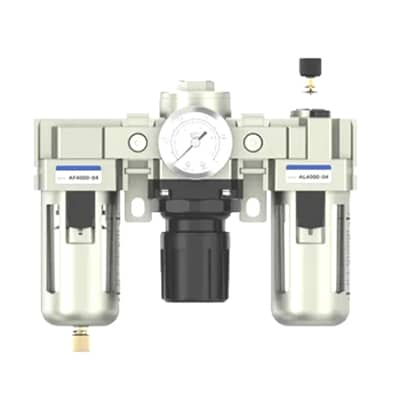
A Pressure Regulator (often part of an FRL unit) is a mechanical valve that reduces the incoming high-pressure air from the compressor to a safe, controlled lower pressure for your machine.
- The Water Hose Analogy: Imagine the main water valve on the side of your house. If you turn it down, the overall water pressure drops. The water comes out weaker and has less “punch.”
- When to use it: You use a pressure regulator to set the maximum safe pushing force of a cylinder. If your cylinder is crushing delicate electronic parts or damaging tooling, you need to lower the pressure using a regulator.
What is a Flow Control Valve? (Controlling Speed)
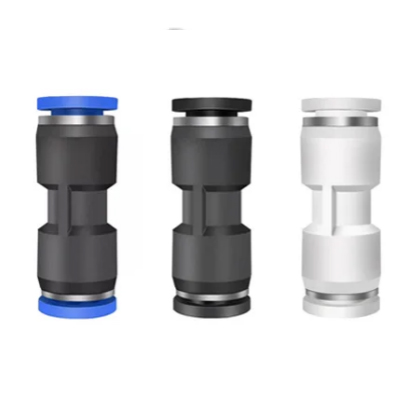
A Flow Control Valve (often sold as a pneumatic speed controller push-in fitting) features a tiny, adjustable needle valve inside. It physically restricts the volume of air that can pass through it per second.
- The Water Hose Analogy: Imagine putting your thumb over the end of a garden hose. The water pump’s pressure hasn’t changed, but you are restricting the volume of water escaping.
- When to use it: You use a flow control valve when you want the cylinder to extend or retract smoothly and slowly, without altering its final pushing force.
The Dangerous Illusion: Using Flow Control to Reduce Force
This is where many junior engineers make a catastrophic mistake.
Let’s say a cylinder is crushing a fragile part. The engineer thinks, “I will just close the flow control valve to make it hit the part softer.” At first, it looks like it worked. The cylinder moves very slowly and gently touches the fragile part. But a second later—CRACK. The part shatters. Why?
Because of Static vs. Dynamic Pressure. A flow control valve restricts air while the air is moving. But once the cylinder stops moving (when it hits the part), the air keeps squeezing through the tiny flow control valve until the pressure inside the cylinder equalizes with the main system pressure (e.g., 6 bar). The cylinder eventually applies its full, crushing force.
The Lesson: Never use a flow control valve to protect fragile parts. Only a Pressure Regulator can cap the maximum force.
Pro-Tip: The Secret to Smooth Movement (Meter-Out)
If you have decided to use a flow control valve to slow down your cylinder, you must install it correctly. There are two ways to control speed: restricting the air going IN, or restricting the air coming OUT.
If you restrict the air going into the cylinder (Meter-In), the air compresses and decompresses like a bouncing spring, causing the cylinder to stutter and jerk.
The B2B Industry Standard: Always use Meter-Out Speed Controllers (Exhaust flow control). By restricting the air leaving the cylinder, you create a cushion of back-pressure. The cylinder is forced to push against this cushion, resulting in an incredibly smooth, hydraulic-like motion.
How to Use Them Together (The Ultimate Pneumatic Circuit)
A properly designed pneumatic circuit doesn’t choose between a regulator and a flow control valve; it uses both in perfect harmony.
- At the Machine Inlet: Install a high-quality FRL (Filter, Regulator, Lubricator) unit. Set the regulator to the exact pressure needed to generate the correct force for your application (e.g., 4 bar). This protects your entire machine.
- At the Cylinder Ports: Install our premium Meter-Out Flow Control Push Fittings directly into the cylinder’s extend and retract ports. Adjust the needle valves to dial in the perfect, smooth operating speed.
Conclusion: Stop Guessing, Start Sourcing Right
Confusing pressure and flow leads to broken parts, jerky machines, and wasted energy. By remembering the Golden Rule—Pressure for Force, Flow for Speed—you can design pneumatic systems that run flawlessly for years.
Are you building a new automated system? We are a direct manufacturer of precision pneumatic components. Whether you need heavy-duty FRL units to regulate your system pressure, or bulk quantities of Meter-Out Speed Controller fittings to guarantee smooth cylinder motion, we have the exact parts you need.