In automated manufacturing, high-speed robotic arms rely on suction cups to pick up, transfer, and place objects ranging from delicate microchips to heavy cardboard boxes. But have you ever wondered where that suction actually comes from?
To the untrained eye, it seems like magic: you blast compressed air into a small block, and somehow, it creates a powerful vacuum that pulls things towards it. This counter-intuitive process is driven by an elegant piece of fluid dynamics called the Venturi Effect, and the device responsible is the pneumatic vacuum generator (also known as a vacuum ejector).
In this guide, we will break down the physics behind the Venturi effect, look inside a vacuum ejector, and explain the essential components you need to build a flawless, drop-free pick-and-place system.
The Physics: What is the Venturi Effect?
Discovered by Italian physicist Giovanni Battista Venturi in the late 18th century, the Venturi effect describes how fluid pressure behaves when it flows through a constricted section (a choke point) of a pipe.
To understand it without complex math, think of a simple garden hose. If you put your thumb over half of the nozzle, the water sprays out much faster. Because the same amount of water has to squeeze through a smaller space in the same amount of time, its velocity must increase.
The Venturi effect states that as the velocity of a fluid (or compressed air) increases, its static pressure decreases. If you accelerate the air fast enough through a narrow enough restriction, the pressure drops so low that it creates a negative pressure zone—a vacuum—relative to the surrounding atmospheric pressure.
Inside a Vacuum Ejector: Step-by-Step
A pneumatic vacuum generator is incredibly simple, consisting of no moving parts. Here is what happens inside the aluminum block in a fraction of a second:
- The Supply Port: Compressed air enters the generator. While your main plant air lines might be operating within standard industry pressure ratings of 1.0-1.5MPa, this air is typically regulated down to the generator’s sweet spot (usually around 0.4 to 0.6 MPa) for optimal efficiency.
- The Converging Nozzle: The air is forced through a tiny, cone-shaped nozzle. As the passage narrows, the air velocity skyrockets to supersonic speeds, causing the pressure to plummet.
- The Vacuum Port: Right at the exit of this tiny nozzle, there is an opening connected to the vacuum port. Because the pressure of the accelerated air is now much lower than the ambient atmospheric pressure, it literally “sucks” the surrounding air in through this port. This is where your suction cup is attached.
- The Diffuser (Exhaust): The original supply air, combined with the air sucked in from the vacuum port, expands into a wider diffuser section and is harmlessly exhausted into the atmosphere (often through a silencer).
Pneumatic Vacuum Generators vs. Electric Vacuum Pumps
Why do engineers prefer pneumatic ejectors over traditional electric mechanical vacuum pumps in automation?
- No Moving Parts: There are no pistons, vanes, or motors to wear out. This means zero friction, zero heat generation, and virtually zero maintenance.
- Lightweight and Compact: A pneumatic generator is small enough to be mounted directly on the robotic arm (End-of-Arm Tooling, EOAT), eliminating the need for long, bulky vacuum hoses that reduce response times.
- Instantaneous Response: Because they are controlled by simple solenoid valves, pneumatic generators can turn the vacuum on and off in milliseconds, enabling ultra-fast cycle times.
Building a Reliable Pick-and-Place System
A high-performance vacuum circuit requires more than just the generator. If you want to prevent “dropped parts”—the nightmare of any production line—you need to pair the generator with the right components.
1. The Right Suction Cups (Vacuum Pads)
The generator creates the vacuum, but the pneumatic suction cups do the lifting. You must match the cup material (silicone, NBR, polyurethane) and shape (flat, bellows) to the workpiece’s surface texture and weight.
2. Inline Vacuum Filters
This is the most critical, yet frequently forgotten, component. Because the vacuum port is constantly sucking in air, it also sucks in ambient dust, cardboard particles, or oil. If debris clogs the microscopic Venturi nozzle inside the generator, your vacuum will fail instantly. Installing a small, transparent inline vacuum filter between the suction cup and the generator protects your system and provides an easy visual maintenance check.
3. Leak-Free Push-in Fittings
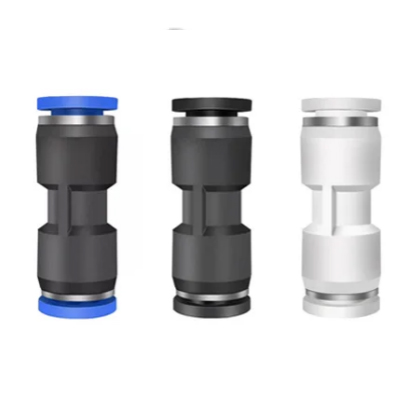
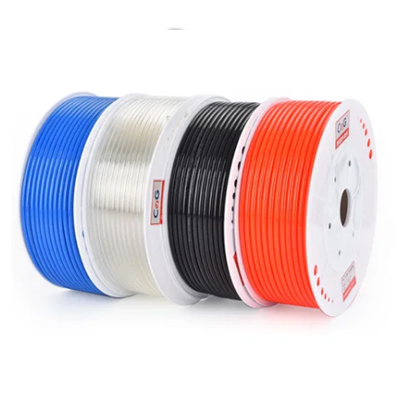
A compressed air leak wastes money, but a vacuum leak causes you to drop products and crash the machine. Vacuum lines are incredibly sensitive to ambient air sneaking in. Always use premium, high-tolerance push-in fittings and high-quality polyurethane tubing to ensure an airtight seal from the cup to the generator.
Conclusion
Understanding the Venturi effect allows you to appreciate the elegant, maintenance-free power of pneumatic vacuum generators. By stepping down your standard plant pressure and forcing it through a precision-machined nozzle, you can achieve reliable, lightning-fast pick-and-place automation.
Need to Upgrade Your Vacuum Systems?
From high-efficiency vacuum ejectors and protective inline filters to a wide variety of suction cups and leak-free fittings, our engineering team can help you design a drop-free automation circuit. Contact us Now!