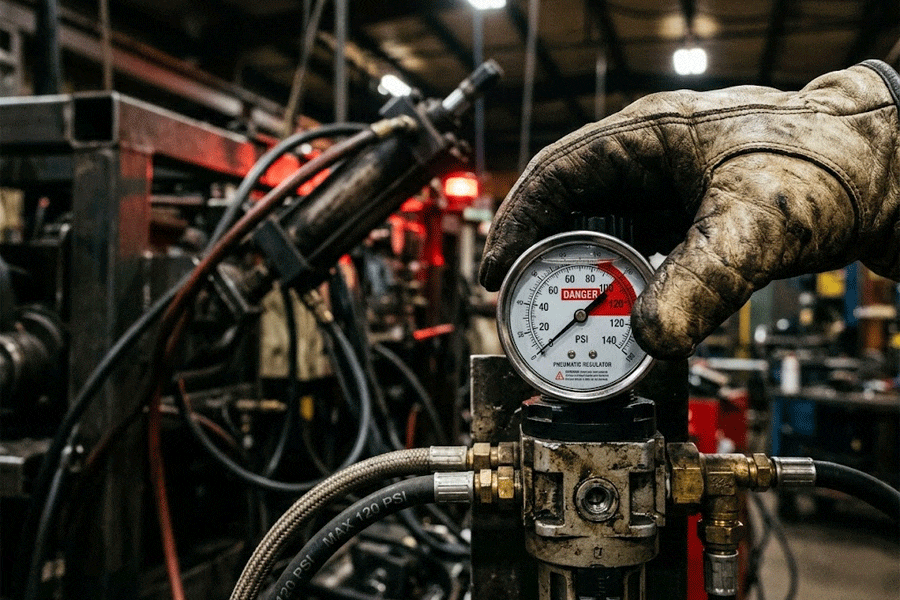
Walk onto a factory floor and watch what happens when an automated machine starts running a little sluggishly. Nine times out of ten, a well-meaning operator will walk over to the main air regulator, grab the dial, and crank the pressure from 80 PSI all the way up to 120 PSI.
Their logic is simple: “More pressure means the machine will run faster and hit harder, right?”
Wrong. This is the single most destructive myth in industrial automation. Cranking up the pressure to fix a speed issue is like pressing the gas pedal to the floor while your parking brake is engaged. It doesn’t solve the root problem, but it will absolutely destroy your engine.
Over-pressurizing your pneumatic system is silently murdering your expensive cylinders, blowing out seals, and causing your electricity bill to skyrocket. In this guide, we will debunk the “More PSI is Better” myth, expose the hidden costs of over-pressurization, and show you the exact pneumatic valves and regulators you need to take back control of your factory.
The Myth: Pressure vs. Flow
To understand why cranking the dial is a terrible idea, you must understand the fundamental difference between Pressure and Flow in pneumatics.
- Pressure (PSI / Bar) gives you FORCE. It dictates how much weight a pneumatic cylinder can push or lift. (Think of it as a bodybuilder’s raw strength).
- Flow (CFM / LPM) gives you SPEED. It dictates how quickly that cylinder can extend or retract. (Think of it as a sprinter’s speed).
If your pneumatic cylinder is moving too slowly, it doesn’t need more force (pressure); it needs more air volume (flow). By turning up the regulator, you are forcing the cylinder to hit with violent, unnecessary strength without actually solving the speed restriction.
Hidden Cost #1: Artificial Demand (The Energy Vampire)
Let’s assume your pneumatic press needs exactly 60 PSI to safely and effectively stamp a part. If your operator cranks the system up to 90 PSI “just to be safe,” what happens to that extra 30 PSI?
Nothing useful. The cylinder still does the exact same job, but now it is packed with dense, high-pressure air. This phenomenon is called Artificial Demand.
Because compressed air is a gas, higher pressure means you are packing exponentially more air molecules into the exact same physical space (the cylinder chamber). When the valve exhausts, all that extra, highly compressed air is just vented into the atmosphere. Your expensive air compressor is running overtime, burning massive amounts of electricity, just to fill your cylinders with “dead air” that does zero actual work.
Hidden Cost #2: Component Murder (The “Slamming” Cylinder)
Have you ever heard a loud “BANG! BANG!” coming from a pneumatic machine? That is the sound of over-pressurization murdering your equipment.
When you feed 100 PSI into a cylinder that only needs 60 PSI to move its load, the cylinder accelerates violently. When it reaches the end of its stroke, it doesn’t stop smoothly—it slams into the metal end-caps with devastating kinetic energy.
Within weeks, this continuous slamming will:
- Shatter the internal piston bumpers.
- Blow out the rubber pneumatic seals (causing immediate internal leaks).
- Send shockwaves through the machine frame, destroying expensive tooling and linear guides.
Hidden Cost #3: Amplified Air Leaks
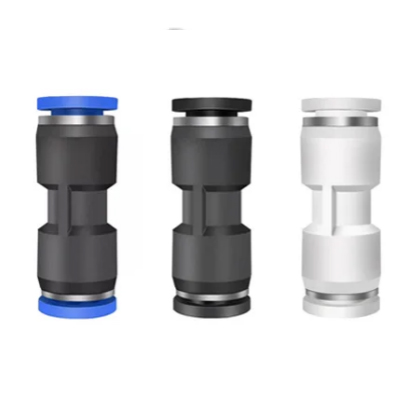
As we covered in our previous guide, compressed air leaks are incredibly expensive. But did you know that leak rates are directly tied to system pressure? If you have an aging push-to-connect fitting that leaks 5 CFM at 80 PSI, cranking the system up to 110 PSI will force the air out of that exact same hole much faster, turning a $500/year leak into a $1,000/year leak instantly.
The Fix: Point-of-Use Regulation & Control
You cannot rely on the main compressor room to dictate the pressure for every single machine. Different tools need different pressures and speeds. To protect your equipment, you must implement Point-of-Use Control using the right pneumatic hardware.
1. Install Pneumatic Air Regulators (FRLs)
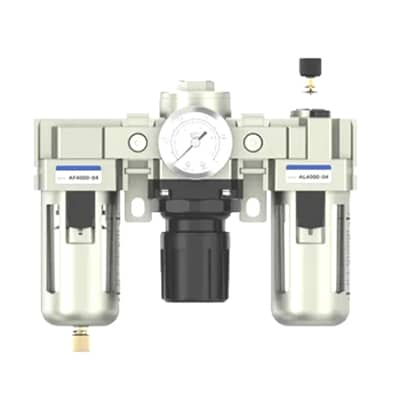
Every single machine must have its own Pneumatic Air Regulator (or FRL unit) installed at the air inlet. This allows you to step down the factory’s main 110 PSI line to the exact 60 or 70 PSI that the specific machine requires.
- 💡 Pro-Tip: Tamper-Proof Your Regulators! Operators love to secretly turn the pressure back up on the night shift. Upgrade to our Lockable / Tamper-Proof Pneumatic Regulators. Once you set the perfect pressure, you can push the knob down and secure it with a padlock. No more unauthorized adjustments!
2. Use Flow Control Valves for Speed
If pressure doesn’t dictate speed, what does? Flow Control Valves (Speed Controllers). Instead of cranking the main regulator, install a meter-out flow control valve directly onto the cylinder ports. This brilliant little valve restricts the exhaust air leaving the cylinder, creating a smooth, controlled cushion that dictates exactly how fast the rod extends, completely eliminating the violent “slamming” effect.
3. The Tubing Size Secret
If you have installed a flow control valve and the cylinder is still too slow, do not turn up the pressure! Your tubing is likely causing a bottleneck. A tube that is too narrow restricts CFM flow.
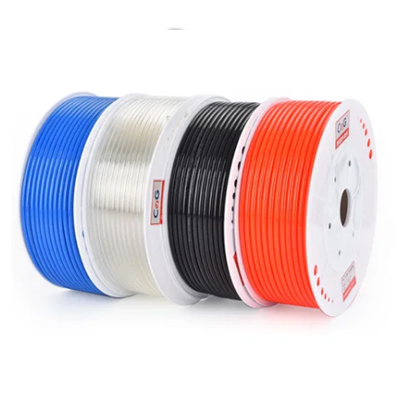
- The Fix: Simply upgrade to our larger Outer Diameter (OD), highly smooth Polyurethane (PU) Tubing. A larger tube allows massive amounts of air to flow instantly, giving you the speed you need at a safely regulated pressure.
Conclusion: Stop Paying for Pressure You Don’t Need
More pressure does not equal more productivity; it equals more broken parts, higher energy bills, and dangerous machine operation. By educating your team on the difference between pressure and flow, and investing in the proper control hardware, you can instantly extend the lifespan of your machines by years.
Are you ready to stop the slamming and start saving money?
Take control of your factory’s air supply today. Explore our premium line of Lockable Pneumatic Regulators, precision Flow Control Valves (Speed Controllers), and high-flow Polyurethane (PU) Tubing.