In automated manufacturing, every second counts. If your pneumatic cylinder is moving sluggishly, crawling, or taking longer to complete its stroke, your machine’s cycle time drops, and production efficiency suffers.
When a cylinder slows down, the knee-jerk reaction is often to assume the cylinder is broken and needs immediate replacement. However, in many cases, the cylinder itself is fine. The real issue usually lies somewhere else in your air circuit.
Before you order a new cylinder and tear apart your machine, run through this quick 4-step diagnostic checklist to find the hidden culprit.
Check #1: Is Your Air Pressure and Flow Sufficient?
Pneumatic cylinders run on a simple principle: they need adequate air pressure (to generate force) and adequate air flow (to generate speed). If your cylinder is moving slowly, the very first place to check is your air supply.
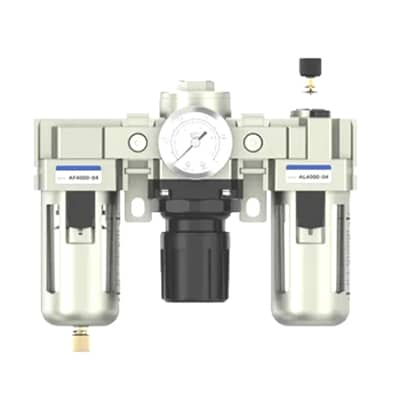
Look at your FRL Unit (Filter, Regulator, Lubricator) upstream:
- Regulator Setting: Did someone accidentally turn down the pressure regulator? Ensure it is set to the correct operating pressure for your application (usually between 70 to 90 PSI / approx. 5 to 6 Bar).
- Clogged Filter: If the air filter bowl is full of water, or the filter element is heavily clogged with compressor oil and dirt, it will cause a massive pressure drop, choking the air flow to your cylinder.
Check #2: Are the Pneumatic Speed Controllers Misadjusted?
Pneumatic speed controllers (also known as flow control valves) are specifically designed to regulate how fast a cylinder extends or retracts. They are usually mounted directly onto the cylinder ports.
Because these valves are easily accessible, machine operators sometimes manually turn the adjustment knobs to slow the machine down, or vibration might cause them to slowly close over time.
- The Fix: Try opening the speed controller slightly (turn counter-clockwise) to see if the cylinder speed increases.
- Pro Tip: Always ensure you are using Meter-Out control for smooth, consistent cylinder movements. Meter-in control often causes jerky, crawling motions.
Check #3: The Hidden Culprit – Clogged Pneumatic Silencers
This is the secret that veteran pneumatic engineers know: If air can’t get out, the cylinder can’t move.
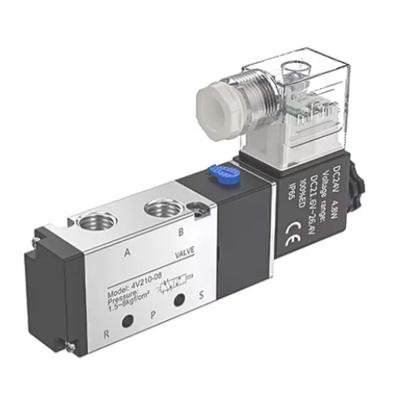
For a pneumatic cylinder to move forward, the air in the opposite chamber must be exhausted quickly. This exhaust air is routed back through the directional solenoid valve and out through a pneumatic silencer (muffler). Over months of use, these silencers can become completely blocked by dust, factory debris, and exhausted compressor oil.
When the silencer is choked, backpressure builds up, acting like a brake against the cylinder’s piston.
- The Fix: Safely depressurize the system, locate the exhaust ports on your solenoid valve, and unscrew the silencers. Clear the area and run a quick test on the cylinder. If it suddenly moves at full speed, your silencers are clogged. Replace them immediately!
Check #4: Internal Wear, Friction, or Side-Loading
If your air supply is good, the speed controllers are open, and the exhausts are clear, then—and only then—should you look at the pneumatic cylinder itself.
- Internal Seal Wear: Over time, a lack of lubrication can cause the internal piston seals to dry out and wear down. Conversely, incompatible compressor oils can cause the seals to swell. Both conditions drastically increase friction against the cylinder barrel.
- Side-Loading: Look at how the cylinder is mounted. Is the rod pushing at an angle? If the load is not perfectly aligned with the cylinder rod, it creates “side-loading.” This forces the rod against the bearing bush, creating immense friction that slows the cylinder down and will eventually snap the rod.
(Need help sizing a stronger cylinder? Check out: The Ultimate Pneumatic Cylinder Sizing Guide: How to Calculate Bore, Stroke, and Force)
Time for an Upgrade? Did your troubleshooting reveal a clogged FRL, a broken speed controller, or a worn-out cylinder? Don’t let sluggish components slow down your factory. Browse our extensive catalog of high-performance Pneumatic Cylinders, Speed Controllers, and Silencers designed to keep your automation running at peak speed.