If you have ever dealt with a pneumatic cylinder that suffers from jerky motion, bounces at the end of its stroke, or slams violently into the equipment, you know how frustrating it can be. Often, the culprit isn’t a faulty cylinder or a bad pneumatic solenoid valve. The real issue is usually a small, inexpensive component that has been installed incorrectly or chosen poorly: the pneumatic speed controller.
Also known as pneumatic flow control valves, these crucial fittings dictate how fast an air cylinder extends or retracts. However, the most common mistake engineers and maintenance teams make is confusing the two primary types of control circuits: Meter-In and Meter-Out.
Choosing the wrong configuration can lead to destroyed seals, inconsistent machine cycles, and costly downtime. In this comprehensive guide, we will break down exactly how a pneumatic speed controller works, clarify the critical differences between meter-in and meter-out control, and show you how to choose the right fitting for your automated system.
What is a Pneumatic Speed Controller and How Does It Work?
At first glance, a pneumatic speed controller might look like a standard push-to-connect fitting or a simple restrictor. In reality, it is a smart, two-in-one directional component.
Inside the brass or composite body of a standard speed controller, two distinct mechanisms work together to manage the compressed air:
- The Check Valve (One-Way Valve): This allows compressed air to flow freely in one direction without any restriction.
- The Needle Valve (Adjustable Restrictor): This restricts the air flow in the opposite direction. By turning the adjustment knob or screw on the top of the fitting, you manually widen or narrow the orifice, controlling the exact volume of air that passes through.
The Golden Rule of Airflow: Depending on the direction the compressed air is traveling, the controller either allows free flow (bypassing the needle valve via the check valve) or forces regulated flow (blocking the check valve and forcing air through the adjustable needle valve).
Understanding this internal “one-way restriction” is the key to mastering air cylinder speed control. Once you know which direction is restricted, you can determine whether your system requires a meter-in or a meter-out setup.
Meter-Out Control (Exhaust Flow Control): The Industry Standard
When engineers design a pneumatic circuit for a double-acting cylinder, meter-out flow control is the undisputed industry standard.
In a meter-out configuration, the pneumatic speed controller is installed so that air enters the cylinder freely (bypassing the restriction via the check valve) but is strictly restricted as it leaves the cylinder (forced through the needle valve). You are essentially choking the exhaust air.
Why is Meter-Out Preferred in Pneumatic Systems?
To understand why this method is so critical, we have to look at a fundamental rule of fluid power: Unlike hydraulic fluid, which is incompressible, air is highly compressible.
If you try to control the speed of a cylinder by restricting the air entering it, the air inside will compress and expand like a coiled spring whenever the load or internal friction changes. This “spring effect” is exactly what causes a pneumatic cylinder to suffer from jerky motion, chatter, or sudden, uncontrolled lunges.
By using a meter out flow control for double acting cylinders, you restrict the exhausting air instead. This builds up a steady, opposing force known as back pressure on the exhausting side of the piston.
The Result: This back pressure acts as a constant dampening “brake” against the incoming driving air. It holds the piston firmly caught between two pockets of pressurized air, ensuring a highly controlled, smooth operation regardless of load fluctuations.
Key Applications for Meter-Out Controllers:
- Virtually all standard double-acting cylinders.
- Automation mechanisms requiring precise, smooth, and repeatable motion.
- Heavy-load lifting, clamping, or horizontal pushing operations.
Pro Tip: When buying replacement parts, note that most elbow-style pneumatic speed controllers designed to thread directly into a cylinder port are manufactured as meter-out valves by default. Always check the flow direction symbol etched on the valve body before installation!
Meter-In Control (Supply Flow Control): When Does It Make Sense?
If meter-out is the industry standard for most systems, when should you use meter-in flow control?
In a meter-in circuit, the pneumatic speed controller is flipped. It restricts the compressed air entering the cylinder (supply air) and allows the exhaust air to flow out freely. Because there is no back pressure on the exhaust side to act as a dampening brake, the cylinder’s movement relies entirely on the incoming air pushing against the load and internal friction.
The Downside of Meter-In Control
As mentioned earlier, air is highly compressible. When you restrict the supply air without any back pressure on the exhaust side, any slight change in the load or friction will cause the air to compress or expand suddenly.
If the cylinder encounters a sticky spot or a sudden drop in resistance, it will lunge forward unpredictably. This makes a meter-in flow control circuit highly unsuitable for standard double-acting cylinders moving heavy or variable loads.
Where Meter-In Control Shines
Despite its limitations, meter-in control is absolutely essential in a few specific scenarios:
- Single-Acting Cylinders: These cylinders only use compressed air to move in one direction and rely on a mechanical spring to return. Because the internal spring already provides constant, predictable resistance (acting like back pressure), you must use a meter-in speed controller to regulate the incoming air.
- Extremely Small Volume Cylinders: For miniature pneumatic grippers or clamps where the air volume is too small to build up effective back pressure, meter-in is often the only viable option.
Meter-In vs. Meter-Out: Quick Selection Guide
For a quick reference on the shop floor or during the design phase, use this comparison table to ensure you are selecting the correct pneumatic speed controller for your application.
| Feature | Meter-Out Control (Exhaust) | Meter-In Control (Supply) |
|---|---|---|
| Airflow Restriction | Restricts air leaving the cylinder | Restricts air entering the cylinder |
| Primary Application | Double-acting cylinders (Industry Standard) | Single-acting cylinders (Spring return) |
| Motion Stability | Highly stable; prevents jerky motion | Can be jerky/unpredictable if load varies |
| Back Pressure | Creates back pressure (acts as a brake) | No back pressure (relies on load resistance) |
| Typical Installation | Threaded directly into cylinder ports | Often installed on the pneumatic solenoid valve |
Troubleshooting: Why is My Pneumatic Cylinder Bouncing or Slamming?
Even with a basic understanding of meter-in vs. meter-out circuits, pneumatic systems can still experience issues if the speed controllers are adjusted incorrectly or the wrong type is installed. Here is a quick troubleshooting guide for the most common cylinder speed problems:
1. The Cylinder Exhibits Jerky Motion (Chatter) If your double-acting cylinder stutters, crawls, or moves in a jerky, start-and-stop motion, you are likely losing back pressure.
- The Fix: First, verify that you haven’t accidentally installed a meter-in controller on a double-acting cylinder. If the setup is correct (meter-out), check for air leaks in your pneumatic fittings or the cylinder seals themselves.
2. The Cylinder Slams Violently at the End of its Stroke Slamming means the cylinder is moving too fast and is not being cushioned.
- The Fix: Turn the needle valve adjustment knob clockwise to restrict the exhaust airflow further, increasing the back pressure “brake.” (Note: If the overall speed is correct but it only slams at the very end, you should adjust the cylinder’s built-in pneumatic cushion instead of the speed controller). If adjusting the speed controller does nothing, the internal check valve may be broken, and the fitting needs to be replaced.
3. The Exhaust Air is Too Loud When high-pressure air is suddenly forced through a restricted orifice, it can create a loud, hissing noise that violates factory safety standards.
- The Fix: Upgrade to a pneumatic exhaust speed controller with a muffler. These specialized fittings combine a flow control valve with a sintered bronze or plastic silencer, significantly reducing exhaust noise while maintaining precise speed control.
How to Choose the Right Pneumatic Speed Controller
When it’s time to order replacement parts or design a new pneumatic circuit, selecting the right physical form factor is just as important as choosing the correct flow direction. Here is what you need to consider before requesting a quote:
1. Form Factor: Elbow vs. Inline
- Elbow Pneumatic Speed Controllers: These are designed with a 90-degree bend. They thread directly into the cylinder’s air ports, saving space and allowing the pneumatic tubing to run flush against the equipment. Most elbow controllers are configured for meter-out by default.
- Inline Flow Control Valves (Tube-to-Tube): These are installed in the middle of the pneumatic tubing line, away from the cylinder. They are ideal when the cylinder is in a hard-to-reach area, allowing operators to adjust the speed from a more accessible control panel.
2. Connection Type: Push-to-Connect
Look for push-to-connect (or push-in) meter-out speed controllers. They allow engineers to instantly secure standard polyurethane (PU) or nylon tubing without the need for clamps or tools, drastically reducing assembly time.
3. Global Thread Standards: NPT vs. BSPT/G-Thread
Ensure your supplier can provide the correct thread type for your region’s equipment standards:
- NPT (National Pipe Taper): The standard for automation equipment in North America.
- BSPT / G-Thread: The dominant standard across Europe, Asia, and the Middle East. Choosing a supplier that stocks both guarantees compatibility whether you are maintaining local machinery or exporting integrated systems overseas.
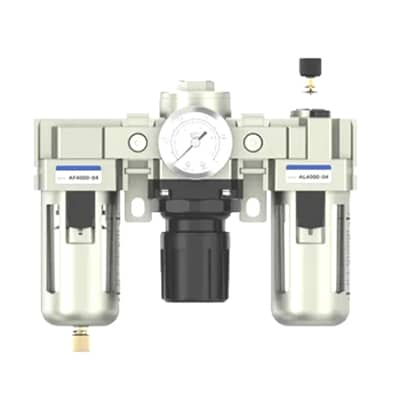
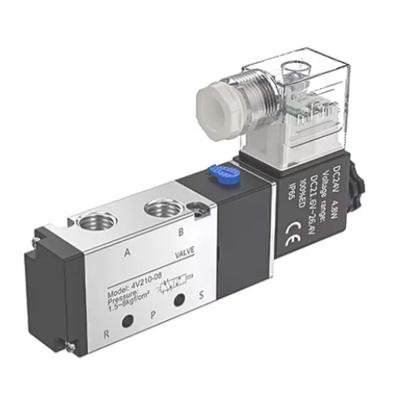
(Pro Tip: Upgrading your system? Don’t forget to check the condition of your upstream components. A well-regulated FRL unit and a responsive pneumatic solenoid valve are essential for providing clean, consistent air to your speed controllers.)
Frequently Asked Questions (FAQs)
Does a speed controller go on the supply or exhaust? For standard double-acting cylinders, the speed controller should go on the exhaust port (meter-out). This restricts the air leaving the cylinder, creating back pressure for smooth movement. For single-acting (spring-return) cylinders, it should go on the supply port (meter-in) to control the incoming air.
How do I adjust a pneumatic cylinder’s speed? To adjust the speed, locate the adjustment knob or screw on the top of the pneumatic speed controller. Turning the knob clockwise (inward) closes the needle valve, restricting airflow and slowing the cylinder down. Turning it counter-clockwise (outward) opens the valve, allowing more air and increasing the cylinder’s speed. Always adjust slowly while the machine is running safely to observe the changes.
Can I use a meter-out controller on a single-acting cylinder? No, it is highly discouraged. A single-acting cylinder uses a mechanical spring to return to its original position and exhausts air directly to the atmosphere through the directional control valve. If you restrict this exhaust with a meter-out controller, the spring may not have enough force to push the air out, causing the cylinder to stall or fail to retract fully. Always use a meter-in circuit for single-acting setups.
Conclusion: Getting Your Pneumatic Speed Control Right
A jerky, slamming, or unpredictable pneumatic cylinder is more than just a nuisance; it is a fast track to damaged seals, broken tooling, and expensive machine downtime.
By understanding the fundamental difference between meter-in and meter-out flow control, you can ensure your automated systems run smoothly, safely, and efficiently. Remember the golden rule: Meter-out for double-acting cylinders, and meter-in for single-acting cylinders.
Ready to Optimize Your Pneumatic Systems? Whether you are designing a new automated assembly line, upgrading existing machinery, or sourcing reliable replacement parts for your facility, choosing the right pneumatic fittings is critical.
We supply a comprehensive range of high-quality pneumatic speed controllers, FRL units, solenoid valves, and pneumatic fittings designed to meet rigorous international standards (including NPT, BSPT, and G-thread specifications).
- Looking for bulk pricing or specific configurations? * Need reliable international shipping for your automation projects?