Introduction
People sometimes get confused between fast connects, compression fittings, and grooved couplings when they are picking out pipe fittings. If you choose the wrong one, you could have leakage, downtime, or expensive rework. This handbook explains their concepts, compares their performance, and gives industrial decision-makers a tried-and-true way to choose amongst them.
Three Core Fitting Types: Principles, Pros & Cons, and Application Ranges
Quick Connect Fitting: The King of Speed and Convenience
Maintenance personnel often have to deal with frequent disconnections or system tests where every second counts. What is the problem? Using traditional fittings slows things down and can wear out the threads. Quick connect fittings fix this by letting you make connections right away without using tools, threads, or leaks.
Working Principle:
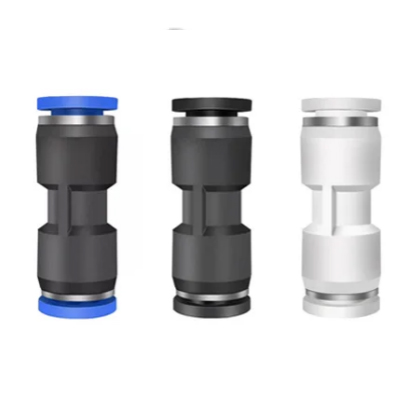
Quick connections, also known as push-to-connect fittings, have an internal collet or ball-lock mechanism. The locking parts hold the tube in place and seal it against an O-ring when it is put in. The tube is free as soon as you let go of the collar.
Applications:
Great for pneumatic, hydraulic, or test systems that need to be changed often or fixed quickly, like making cars, testing semiconductors, and setting up instruments.
Advantages:
- The quickest way to put it up and take it down
- Small size with very little wasted space
- Great for soft tubing like nylon, PU, or Teflon
Limitations:
- Usually less resistant to pressure and vibration than compression types
- Seals can wear out when the temperature is high or the cycle is high.
- Not good for pipes made of thick or strong metal
Compression Fitting: The Symbol of Precision and Reliability
When the pressure or temperature is high, industrial systems need seals that are 100% reliable. Using a rapid connect here could cause leakage or a major failure. Compression fittings use ferrules that fit tightly around the tubing surface to make a metal-to-metal seal.
Working Principle:
Compression fittings use a nut and ferrule (ring) assembly. When you tighten the nut, the ferrule squeezes the tube radially, creating a strong seal. This makes sure that it stays tight and doesn’t leak, even when the temperature or vibration changes.
Applications:
Stainless steel, copper, or hard alloy tubes are often used in instrumentation, hydraulic systems, laboratory sets, and oil and gas process lines.
Advantages:
- The highest pressure rating of the three
- Great for gasses and fluids that are very corrosive
- A long service life and a low danger of leaks
- Works well in places with high temperatures
Limitations:
- Needs installation with regulated torque
- Putting the ferrule or tube back together too many times could harm the surface.
- More time to install and more expensive labor
Key Insight:
Compression fittings are still the best choice for durability and performance in critical systems where failure is not an option.
Grooved Coupling: The Champion of Large-Diameter and Anti-Vibration Systems
It takes a long time and costs a lot of money to weld or flange big pipes. When they vibrate or heat up, traditional joints don’t bend either. Grooved couplings, which have a split housing and an elastomeric gasket, are a modern, flexible, and quick-to-install option.
Working Principle:
A groove is rolled or carved into the ends of the pipe. A C-shaped gasket goes between the two coupling halves, which are then welded together. The gasket makes sure that the seal is tight, and the housing holds the pipe grooves in place for a firm mechanical hold.
Applications:
Mainly used in HVAC, fire protection systems, water supply, and mining activities, especially for pipelines of considerable diameters.
Advantages:
- Installation is quick and doesn’t require welding.
- Takes in vibrations and pipe movement
- Simple to check and take care of
- You can get them in rigid (fixed) or flexible (movement-tolerant) forms.
Limitations:
- The pressure rating depends on the strength of the housing and the substance of the gasket.
- Not good for fluids that are very hot or under a lot of pressure
- Needs tools for cutting grooves
Conclusion
You can find the right mix between speed, dependability, and cost if you know the differences between quick connects, compression fittings, and grooved couplings. You can ensure long-term performance and operating efficiency by matching the size, pressure, and maintenance needs of each system to the right type of joint.