In the world of pneumatics, nomenclature can be incredibly confusing. When a junior engineer or a purchasing manager looks at a Bill of Materials (BOM), they often see terms like “quick fitting,” “push fitting,” or “quick disconnect.”
Because the words “Quick” and “Push” sound functionally identical, many people assume these fittings are interchangeable. They are not. Using the wrong type of fitting won’t just cause an annoying air leak; it can lead to dangerous tube blowouts, ruined automation panels, and wasted manufacturing space.
To make it perfectly clear, here is the golden rule of pneumatic plumbing: Does the tube move across the floor with a human? Use a Quick Release. Does the tube stay rigidly inside a machine frame? Use a Push-to-Connect.
In this guide, we will break down the mechanical differences, explain the “Human vs. Machine” boundary, and show you exactly which fitting to specify for your next project.
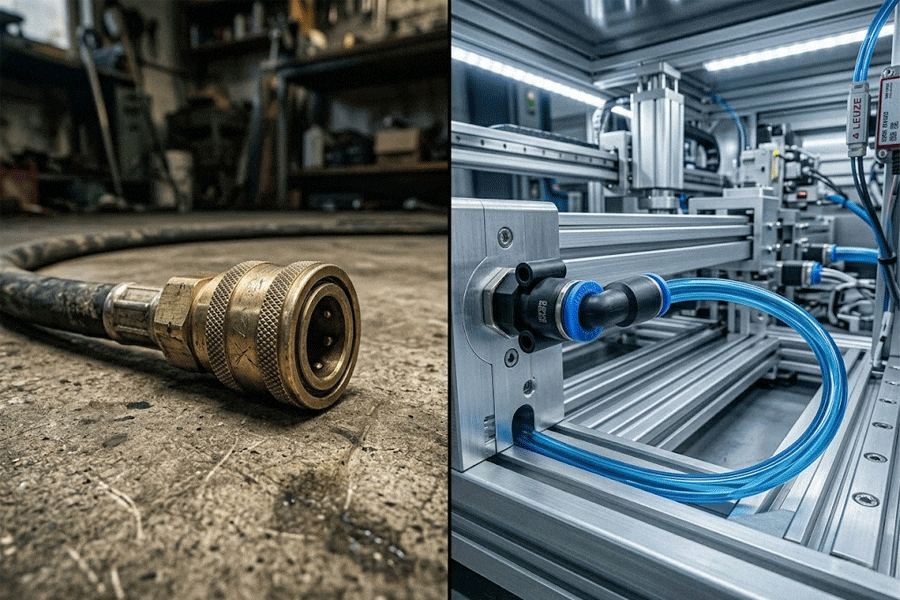
What is a Quick Release Coupling? (Built for Tools & Humans)
A Quick Release Coupling (also known as a quick disconnect or air hose coupler) is a heavy-duty, two-piece metal mechanism designed for frequent, manual connection and disconnection.
- The Mechanism: It features a spring-loaded retracting sleeve. To connect it, you pull the metal sleeve back, insert the plug, and release the sleeve to lock it in place.
- The Application: These are built for dynamic pulling. They are designed to be dragged across concrete floors, stepped on, and violently yanked.
- When to Use Them: You use Quick Release couplings on air compressors, hand-held pneumatic impact wrenches, nail guns, and factory wall outlets. If a human hand operates the tool, you need a Quick Release coupling.
What is a Push-to-Connect Fitting? (Built for Automation & Machines)
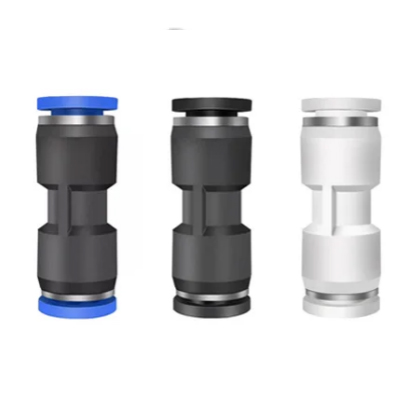
A Push-to-Connect Fitting (often just called a push fitting) is a compact, highly efficient component designed for permanent or semi-permanent routing inside automated machinery.
- The Mechanism: There is no retracting sleeve. You simply push the polyurethane (PU) or polyethylene (PE) tubing directly into the fitting. Inside, a ring of stainless steel lock claws instantly bites into the tube, while an internal O-ring creates a perfect, leak-free seal. To release, you press down on the plastic release ring and pull the tube out.
- The Application: These are built for static routing. They are incredibly lightweight, space-saving, and require zero tools to install.
- When to Use Them: You use Push-to-Connect fittings inside control cabinets, on pneumatic cylinders, solenoid valves, and robotic arms. If the fitting is acting as the “veins and arteries” inside a machine’s skeleton, you must use Push-to-Connect fittings.
The Danger Zone: What Happens When You Mix Them Up?
Mixing up these two fittings leads to catastrophic results on the factory floor. Here are the two most common and dangerous mistakes we see as pneumatic manufacturers:
Mistake 1: Push-Fittings on a Handheld Air Tool (Blowout Risk)
To save a few dollars, a worker might attach a plastic Push-to-Connect fitting to a handheld air drill. As the worker walks around, the PU tube is constantly bending, twisting, and pulling against the fitting’s lock claws. Within a few days, the constant dynamic friction wears down the plastic release ring. Under 90 PSI of pressure, the tube violently blows out, whipping around the workspace and risking severe injury.
- Rule: Never use push-fittings for dynamic, human-operated dragging.
Mistake 2: Quick Releases Inside a Machine Panel (Space & Weight Disaster)
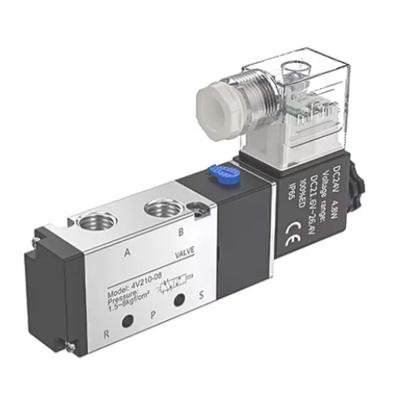
A machine builder decides to use heavy brass Quick Release couplings on a compact manifold block of solenoid valves. The result? The machine is unnecessarily heavy, and the tubing looks chaotic. Worse, when maintenance is required, the technician cannot fit their fingers between the densely packed valves to pull back the sliding sleeves.
- Rule: In automation, space is money. Use compact Push-to-Connect fittings.
The OEM Upgrade: When to Use Brass Push-to-Connect
While our high-quality plastic Push-to-Connect fittings are the industry standard for 80% of automation tasks, some environments are too harsh for plastic, but still too tight for bulky Quick Release couplings.
The Solution: Nickel-Plated Brass Push-to-Connect Fittings. If your machine operates near welding spatter, high heat, or minor physical impacts, our all-metal brass push fittings offer the extreme durability of a Quick Release, but maintain the ultra-compact, push-in convenience required for tight machine panels.
Summary Comparison Table
| Feature | Quick Release Couplings | Push-to-Connect Fittings |
|---|---|---|
| Primary User | Human operators | Automated machines |
| Movement Type | Dynamic (dragging, pulling) | Static (fixed routing) |
| Size & Weight | Bulky and heavy | Compact and lightweight |
| Connection Method | Pull back sleeve, insert plug | Simply push tube into fitting |
| Best For | Air tools, compressors, hoses | Cylinders, valves, control panels |
Conclusion: Source the Right Fittings for Your OEM Project
Understanding the boundary between dynamic human tools and static machine routing is the key to building safe, efficient, and professional-looking pneumatic systems. Leave the Quick Release couplings for the auto mechanics and construction workers.
Are you an OEM or machine builder designing a new automated system? Do not let bulky or unreliable fittings ruin your compact machine design. As a direct manufacturer, we supply millions of premium plastic and nickel-plated brass Push-to-Connect fittings to automation engineers worldwide.