Walk into any manufacturing plant, and you will likely hear the faint, high-pitched “hiss” of compressed air escaping. Industry studies show that a single 1/16-inch air leak can cost a facility hundreds of dollars in wasted electricity every year.
Where do 80% of these leaks occur? Right at the threads of your pneumatic fittings.
To stop these leaks, maintenance technicians have debated for decades over the best sealing method: Teflon Tape (PTFE) or Liquid Thread Sealant. Both have their loyal fans, but choosing the wrong one for your specific application can lead to catastrophic machine failure.
In this guide, we will settle the debate, uncover the deadly mistakes made with PTFE tape, and introduce the modern “zero-prep” fitting solutions that the smartest factories are upgrading to.
Why Do Pneumatic Fittings Need Sealant Anyway?
Before we compare the sealants, it is crucial to understand why you need them.
If you are using Tapered Threads (such as NPT or BSPT/R threads), the threads are cut at a slight angle. As you tighten the male fitting into the female port, the metal threads wedge together to form a mechanical joint. However, microscopic spiral gaps always remain between the crests and roots of the metal threads.
Pressurized air will eventually find its way through this spiral path. A thread sealant’s primary job is not to “glue” the fitting in place, but to act as a pliable filler that completely blocks this spiral leak path.
(Note: If you are using parallel G-threads/BSPP, the sealing logic is completely different. We will cover this game-changing alternative later.)
Teflon Tape (PTFE): The Old Reliable
PTFE (Polytetrafluoroethylene) tape, commonly known as Teflon tape, is the most recognizable sealant in the world. You simply wrap it around the male threads before installation.
The Pros:
- Immediate Use: There is zero cure time. You wrap it, wrench it, and instantly pressurize the system.
- Easy Disassembly: It acts as a dry lubricant, making it very easy to unscrew the fitting later without damaging the port.
- Clean Application: No sticky liquids or messy hands.
The Deadly Mistake: Tape Shreds in Your Valves
While PTFE tape is highly effective, it introduces the biggest risk in pneumatics: System Contamination.
If a technician wraps the tape too close to the end of the fitting (covering the first thread), the sharp edges of the female port will slice off tiny shreds of Teflon as the fitting is tightened. These microscopic plastic strings get blown directly into your air stream.
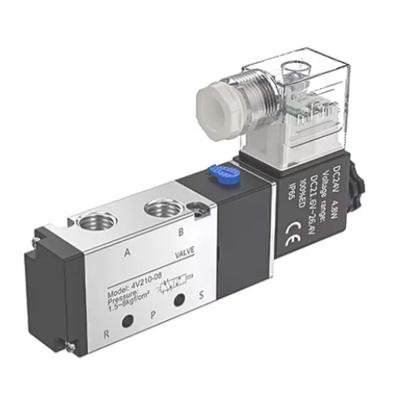
Because Teflon does not melt or dissolve, these shreds will travel downstream and embed themselves into the precision spools of your expensive Pneumatic Solenoid Valves, permanently jamming them and causing sudden machine downtime.
- The Golden Rule: If you must use tape, always leave the first thread bare.
Liquid Thread Sealant (Anaerobic): The Modern Choice
Liquid thread sealants (often referred to by brand names like Loctite) are anaerobic pastes or liquids. “Anaerobic” means they only cure (harden) when they are deprived of oxygen and in contact with active metals.
The Pros:
- 100% Gap Filling: Liquid flows effortlessly into the microscopic valleys of the threads, providing a flawless seal that is highly resistant to heavy machinery vibration.
- Zero Shred Risk: Unlike tape, cured liquid sealant will not shred into strings. Any excess liquid that gets squeezed inside the pipe simply remains liquid and is harmlessly blown out of the system.
- Perfect for Stainless Steel: If you are using Stainless Steel Pneumatic Fittings, liquid sealant is highly recommended. Stainless steel threads are notorious for “galling” (cold welding together under friction). Liquid sealant lubricates the threads during assembly, preventing them from locking up permanently.
The Cons:
- Cure Time Required: You cannot pressurize the system to maximum capacity immediately. It typically requires 2 hours for a functional cure and 24 hours for a full cure.
- Messy: It is easy to apply too much, leaving a sticky residue on the outside of your manifolds.
The Quick Comparison
| Feature | PTFE (Teflon) Tape | Liquid Anaerobic Sealant |
|---|---|---|
| Cure Time | None (Immediate) | 2 to 24 Hours |
| Vibration Resistance | Moderate | Excellent |
| System Contamination Risk | High (Shredding) | Low |
| Best Used For | Quick repairs, standard brass fittings | High vibration, Stainless Steel fittings |
| Application Skill Required | High (Must leave 1st thread bare) | Low (Just apply a drop) |
The Ultimate Solution: Pre-Coated & O-Ring Fittings
What if you didn’t have to choose between messy liquids and risky tape? Today, top-tier manufacturing facilities are eliminating thread sealing labor entirely by upgrading their components.
1. Pre-Coated Brass Pneumatic Fittings
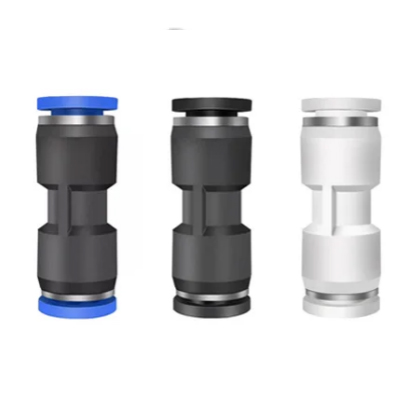
Instead of relying on your technicians to manually apply sealant on the factory floor, you can purchase Push-to-Connect Fittings that come with a factory-applied Teflon coating on the NPT/BSPT threads.
- The Benefit: Ready to use straight out of the box. The baked-on coating provides a perfect, uniform seal every time, eliminating the risk of tape shreds and saving thousands of dollars in labor time.
2. G-Thread (BSPP) Fittings with Built-In O-Rings
If you want to bypass thread sealant entirely, switch to parallel threads. G-Thread Pneumatic Fittings do not seal on the threads at all. Instead, they feature a captive NBR O-ring at the base. You simply screw the fitting down until the O-ring compresses flat against the port face.
- The Benefit: Zero tape, zero liquid, zero cure time, and an absolutely perfect mechanical seal that can be assembled and disassembled dozens of times without degrading.
Conclusion: Stop Wasting Time on Tape
While Teflon tape and liquid sealants both have their place in the technician’s toolbox, relying on manual sealing methods is becoming a thing of the past for high-volume automation.
By upgrading to Pre-Coated or O-Ring sealed pneumatic fittings, you can guarantee a leak-free system, protect your critical solenoid valves from contamination, and drastically reduce installation time.
Are you tired of air leaks and messy thread sealants? Explore our premium range of leak-proof Pneumatic Push-in Fittings, featuring factory-applied Teflon coatings and high-quality G-thread O-ring designs.