To the untrained eye, compressed air seems harmless. After all, it’s just air, right?
In reality, standard industrial pneumatic systems operate at 80 to 120 PSI (5.5 to 8 Bar). At these pressures, compressed air acts like a tightly coiled steel spring. If that energy is released uncontrollably while a technician is performing maintenance, the results can be catastrophic—ranging from blown eardrums and eye injuries to severed fingers caused by suddenly shifting cylinders.
Simply hitting the “OFF” switch on the air compressor is never enough.
In this guide, we will explore the hidden dangers of “trapped pressure,” the dangerous mistakes technicians make every day, and the 4-step OSHA-compliant Lockout/Tagout (LOTO) procedure. Most importantly, we will show you why true safety is impossible without installing the correct pneumatic valves in your circuit.
The Silent Killer: What is “Trapped Pressure”?
The most dangerous assumption a maintenance worker can make is thinking a machine is “dead” just because the main air supply is disconnected.
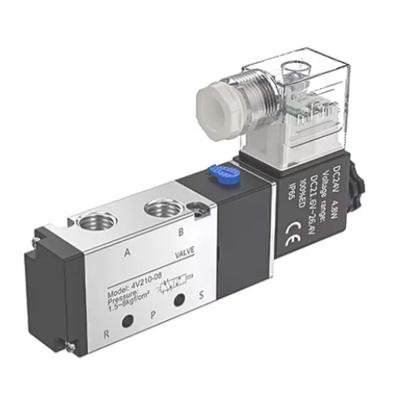
Pneumatic systems are complex networks of valves, regulators, and actuators. If your system uses closed-center solenoid valves or has pilot-operated check valves, high-pressure air gets physically locked inside the cylinder chambers—even when the main power is off.
This is known as Trapped Pressure (or Residual Pressure). If a technician removes a hose or unscrews a fitting while trapped pressure exists, the pneumatic cylinder can violently stroke forward or backward, instantly crushing anything in its path.
3 Dangerous Ways Technicians Depressurize Systems
When a machine lacks proper safety dump valves, technicians often resort to dangerous “shortcuts” to bleed off the air. Are your workers doing any of the following?
1. Cracking a Fitting (The “Hiss” Method)
Many technicians will slowly unscrew a pneumatic fitting with a wrench until they hear a “hiss” of escaping air.
- The Danger: High-pressure air can easily blow the internal O-ring completely out of the fitting, turning it into a high-speed projectile that can cause severe eye injuries. It also destroys the threads of the fitting.
2. Forcing the Solenoid Manual Override
Using a screwdriver to aggressively push the manual override button on a solenoid valve to dump the air.
- The Danger: This not only risks damaging the delicate internal spool of the valve but can also cause sudden, uncontrolled actuator movement if the air path shifts unexpectedly.
3. Ignoring the “Gravity Drop” Hazard
This is a fatal oversight. Imagine a vertically mounted pneumatic cylinder holding up a heavy tooling press.
- The Danger: If you successfully dump all the air pressure out of the system without physically securing the load, the cylinder loses its holding force. The heavy tooling will instantly crash down due to gravity.
The 4-Step Safe Depressurization & LOTO Procedure
To comply with OSHA safety standards and ensure your technicians go home safely, follow this strict Lockout/Tagout (LOTO) procedure:
- Secure Vertical Loads: Before touching any air valves, insert mechanical blocks or safety pins to physically support any vertical loads or suspended tooling.
- Isolate the Main Supply: Close the main air supply valve leading to the specific machine or zone.
- Exhaust Residual Pressure: Actuate the designated pressure release valve to dump all trapped air inside the lines and cylinders out to the atmosphere. Verify the system pressure gauge reads zero (0 Bar/PSI).
- Lockout and Tagout (LOTO): Place a physical padlock through the hole of the isolation valve so it cannot be accidentally turned back on, and attach a warning tag with the technician’s name.
You Can’t Be Safe Without the Right Hardware
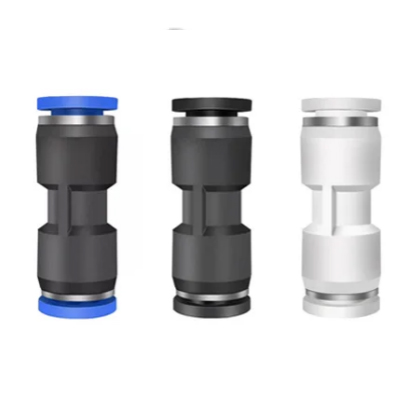
Here is the hard truth: You cannot execute a proper LOTO procedure if your pneumatic system lacks the correct safety hardware. You cannot put a padlock on a standard push-to-connect fitting or a basic brass ball valve. To ensure safety and OSHA compliance, your facility must be equipped with the following dedicated safety components:
1. 3-Way Residual Pressure Release Valves (Lockout Valves)
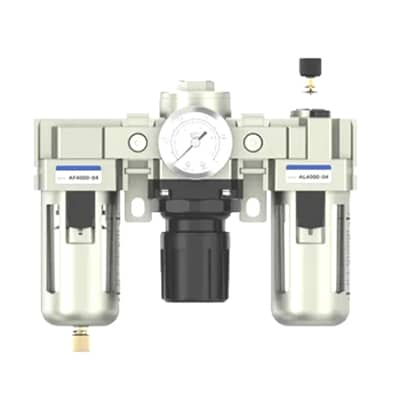
This is the ultimate safety upgrade. Installed directly after your main FRL (Filter, Regulator, Lubricator) unit, a 3-Way Residual Pressure Release Valve does two things simultaneously:
- When pushed down, it blocks incoming air AND instantly exhausts all downstream trapped pressure to the atmosphere.
- It features a high-visibility red handle with built-in padlock holes. Once locked, the system is physically impossible to pressurize.
2. Manual Slide Valves (Hand Valves)
For isolating smaller, localized zones without shutting down the entire machine, Manual Slide Valves are essential. These compact inline valves allow a technician to simply slide a sleeve backward to shut off the air and bleed the downstream pressure locally. They are quick, elegant, and prevent the dangerous habit of “cracking fittings.”
3. Pneumatic Mufflers (The Last Line of Defense)
When a 3-way valve dumps trapped pressure, the sudden expansion of air creates a deafening blast that can exceed 100 decibels, causing permanent hearing damage and violating workplace noise regulations.
- The Fix: You must install a high-quality Pneumatic Muffler (Silencer) onto the exhaust port of every pressure release valve to diffuse the air and suppress the noise to safe levels.
Conclusion: Safety is the Best Investment
Depending on technicians to “be careful” is not a safety strategy. Real safety requires engineering hazards out of the equation. A workplace injury or an OSHA violation will cost a facility tens of thousands of dollars, whereas upgrading your pneumatic circuits with proper safety valves costs only a fraction of that.
Is your pneumatic system OSHA compliant? Don’t wait for an accident to happen. Protect your team and your equipment by upgrading to our premium line of Lockout Valves, Manual Slide Valves, and High-Flow Pneumatic Mufflers today. Contact us Now!