In the world of automated manufacturing, every millisecond counts. Reducing a machine’s cycle time by just half a second can translate to thousands of extra units produced over a year.
When engineers need a pneumatic cylinder to move faster, their first instinct is often to increase the air pressure or install larger tubing. However, as we discussed in our [Tubing Sizing Guide], bigger isn’t always better. More often than not, the culprit behind a sluggish cylinder isn’t a lack of input power—it is the inability to get rid of the exhaust air quickly enough.
If you want to maximize your cylinder’s velocity without overhauling your entire system, there is an inexpensive, highly effective solution: The Quick Exhaust Valve (QEV).

The Speed Killer: Understanding Pneumatic Backpressure
To understand why a Quick Exhaust Valve is so effective, you first need to understand the invisible force slowing your machines down: Pneumatic Backpressure.
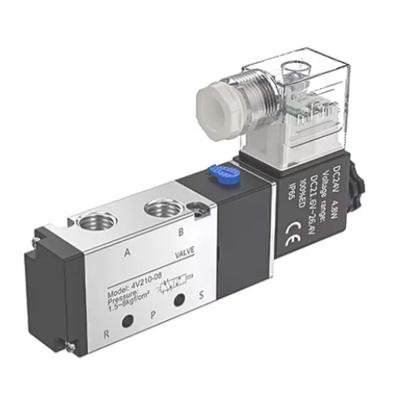
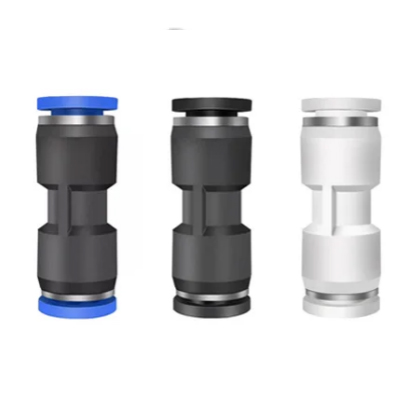
Think of a double-acting cylinder. For the piston to shoot forward rapidly, the compressed air on the opposite side of the piston must be pushed out. In a standard setup, this exhaust air has to travel a long, tortuous path: out of the cylinder, through the pneumatic fitting, down a long length of polyurethane tubing, and finally out through the exhaust port of the directional control (solenoid) valve.
All of that friction inside the tube and the narrow passages of the solenoid valve creates resistance, known as backpressure. It is like trying to sprint while submerged in water. No matter how much pressure you apply to the pushing side, the backpressure on the exhaust side acts as a brake, severely limiting your pneumatic cylinder speed.
Enter the Quick Exhaust Valve (QEV): How It Works
A pneumatic quick exhaust valve is designed to eliminate that long exhaust path. It provides a “shortcut” for the escaping air.
Internally, a QEV contains a flexible diaphragm or a shuttle.
- During actuation (Inlet): When compressed air flows from the directional valve into the QEV, the diaphragm seals off the exhaust port, allowing the air to flow normally into the cylinder to push the piston.
- During exhaust (Outlet): The moment the directional valve shifts and the incoming pressure drops, the diaphragm instantly shifts position. It seals off the inlet port and opens a wide, direct path to the atmosphere.
Instead of traveling all the way back through the long tubing and the solenoid valve, the exhaust air is dumped directly into the room instantly. By eliminating the backpressure, the cylinder can extend or retract at its maximum mechanical speed.
Location Matters: Where to Install Your Quick Exhaust Valve
This is where many junior engineers make a critical mistake. Buying a high-quality QEV is only half the battle; where you put it changes everything.
The Golden Rule of Quick Exhaust Valves: They must be installed as close to the cylinder port as physically possible.
If you install the QEV right next to the solenoid valve at the control panel, the exhaust air still has to travel all the way through the long machine tubing before it gets dumped. You will see zero increase in speed. For maximum effectiveness, thread the QEV directly into the cylinder’s port, or use a very short, rigid nipple fitting to connect them.
The Catch: Don’t Forget the Pneumatic Silencer
While dumping high-pressure air directly to the atmosphere does wonders for reducing machine cycle time, it creates a massive new problem: Noise.
The sudden release of compressed air from a QEV can produce a deafening, sharp “pop” or “bang” that sounds similar to a gunshot. Without mitigation, this extreme noise pollution can violate OSHA safety regulations and cause hearing damage to factory operators.
Therefore, you must never install a quick exhaust valve without a high-quality pneumatic silencer (muffler). When purchasing your QEV, ensure you also specify a heavy-duty sintered bronze muffler or a high-flow plastic silencer to thread directly into the QEV’s exhaust port. A premium silencer will diffuse the air safely, reducing the noise to a gentle hiss without creating new backpressure.
Conclusion
When it comes to optimizing your pneumatic circuits, you don’t always need expensive proportional valves or massive compressors. Sometimes, all you need is to let the air out faster. A properly placed Quick Exhaust Valve is one of the most cost-effective upgrades you can make to significantly reduce cycle times and boost productivity.
Ready to Speed Up Your Production?
Don’t let backpressure slow your cylinders down. Explore our rugged pneumatic quick exhaust valves and high-flow sintered brass silencers designed for maximum speed and safety. Contact us now!