Walk through almost any manufacturing plant during a quiet shift, and you will hear it: the faint, constant “hiss” echoing from the assembly lines.
To many operators, this sound is just harmless background noise. After all, air is free, right? Wrong. In the industrial world, compressed air is often called the “fourth utility,” and it is by far the most expensive one. Because compressing air generates massive amounts of heat, only about 10% to 15% of the electrical energy consumed by an air compressor actually becomes usable compressed air.
When you hear a hiss, you aren’t just losing air—you are literally venting expensive electricity directly into the atmosphere. In this guide, we will break down the shocking financial cost of air leaks, the “invisible” damage they do to your machines, and how spending a few dollars on the right pneumatic components can save your factory thousands.
The Shocking Math: What Does a Leak Cost Per Year?
Let’s put real dollar amounts on those hissing sounds. The cost of a leak depends on the air pressure (PSI) and the size of the hole (orifice). Assuming an industry average electricity cost of $0.08 per kWh, a system operating at 100 PSI, and a compressor running 24/7 (8,760 hours a year), here is the brutal math:
- 1/16-inch leak (approx. 1.5mm): Loses 6.5 CFM. Cost = $500 – $800 per year.
- 1/8-inch leak (approx. 3mm): Loses 26 CFM. Cost = $2,000 – $2,500 per year.
- 1/4-inch leak (approx. 6mm): Loses 104 CFM. Cost = $8,000 – $10,000+ per year.
Now, consider this: the average factory doesn’t just have one leak. The U.S. Department of Energy estimates that a poorly maintained plant loses 20% to 30% of its total compressed air production to leaks. If you have twenty tiny 1/16-inch leaks scattered across your pneumatic circuits, you are burning enough cash to buy a brand-new car every single year.
The “Invisible” Costs Destroying Your Bottom Line
The electricity bill is just the tip of the iceberg. Allowing leaks to persist creates a domino effect that damages your entire operation:
1. Premature Compressor Failure
Your air compressor is designed to cycle on and off based on legitimate machine demand. Leaks create a constant “false demand.” This forces your $50,000 compressor to run continuously, overheating the motor, degrading the oil faster, and cutting its operational lifespan in half.
2. Dropping Pressure, Dropping Quality
When leaks starve the main supply lines, the pressure at the end of the line drops. Pneumatic cylinders move slower, presses don’t apply enough force, and automated tools stall. This leads directly to rejected parts, manufacturing defects, and missed production quotas.
The Top 3 Culprits of Air Leaks (And How to Fix Them)
The good news? You don’t always need to hire an expensive acoustic auditing firm to fix the problem. Up to 80% of all leaks occur in the last few feet of your pneumatic system—right at the machine level. Here are the three main culprits and how to fix them today.
Culprit 1: Cheap, Worn-Out Push-to-Connect Fittings
Many facilities buy the cheapest plastic pneumatic fittings available to save pennies. However, the internal rubber O-rings in low-quality fittings quickly degrade due to vibration and temperature changes, causing an immediate leak.
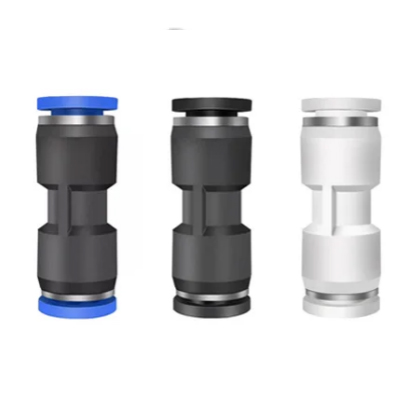
- The Fix: Upgrade to premium Push-to-Connect Pneumatic Fittings. High-quality fittings feature precision-machined grab rings and durable NBR O-rings that maintain a flawless, airtight seal even under constant machine vibration.
Culprit 2: Brittle and Kinked Tubing
Standard nylon or PE (polyethylene) tubing gets brittle over time. If forced into tight corners, it kinks and cracks, creating micro-leaks that are hard to see but easy to hear.
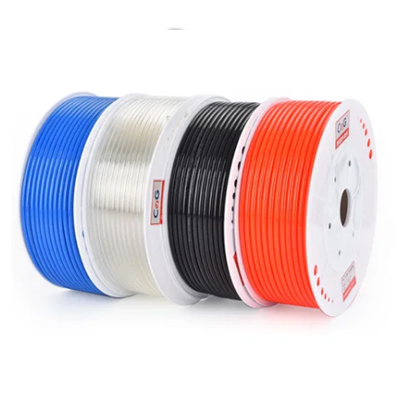
- The Fix: Swap out rigid, aged lines for highly flexible Polyurethane (PU) Air Tubing. PU tubing has incredible elastic memory, resists kinking in tight spaces, and maintains a perfect seal against the fitting’s O-ring for years.
Culprit 3: Unregulated “Artificial Demand”
Does your machine really need 100 PSI to operate? Often, machines only require 60 to 70 PSI, but are subjected to the main line’s 100 PSI. This is called “Artificial Demand.” The higher the pressure, the faster air escapes through existing leaks.
- The Engineering Irony: Lowering system pressure by just 2 PSI reduces compressor energy consumption by 1%.
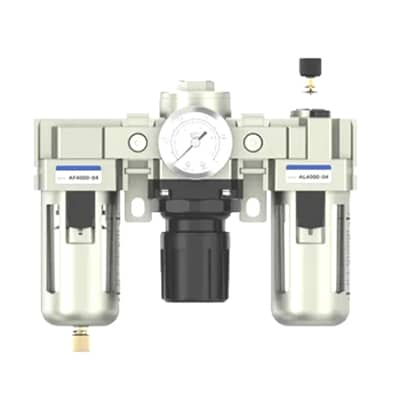
- The Fix: Install a Pneumatic Air Regulator (FRL unit) at every single workstation. Dialing the pressure down to exactly what the machine needs will instantly reduce the volume of air lost to leaks and save massive amounts of energy.
Pro-Tip: The “Soap Water” Test
Don’t have a $3,000 ultrasonic leak detector? No problem. Walk through your facility during a weekend or shutdown period when the machines are quiet but the air is fully pressurized. Listen for the hiss. When you find a suspect fitting or valve, spray a simple mixture of soap and water on it. If it bubbles, you are literally watching your money evaporate.
Conclusion: The Ultimate ROI
In industrial maintenance, fixing an air leak isn’t an “expense”—it is the highest ROI investment you can make. Why lose $800 a year in electricity because you refused to replace a $5 pneumatic fitting?
Stop the bleeding today. Audit your machines, listen for the hiss, and replace those failing components with reliable, leak-proof solutions.
Are you ready to optimize your factory and slash your energy bills? Explore our premium catalog of precision Push-to-Connect Fittings, durable Polyurethane (PU) Tubing, and energy-saving Pneumatic Regulators today.