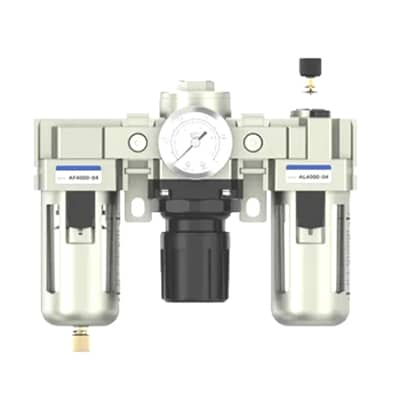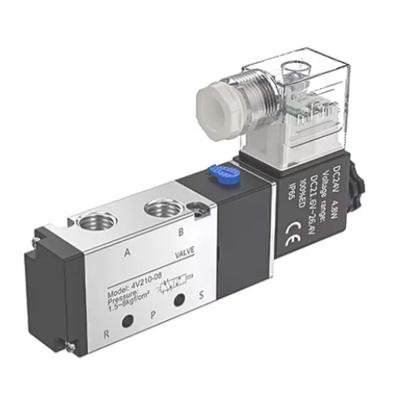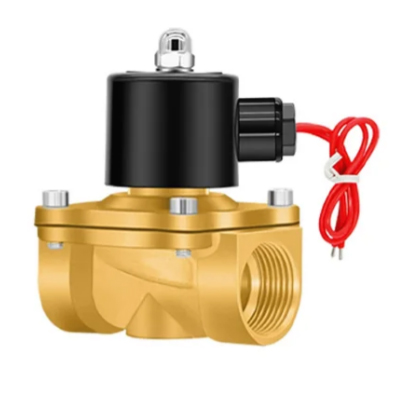
If you are designing a pneumatic system or managing a factory floor, you already know that pneumatic filters act as the “kidneys” of your machinery. They actively strip out water, compressor oil, and pipe scale from the compressed air line.
But here is the catch: a kidney is only useful if it can expel the waste it collects.
Once a filter bowl fills up with condensation, that liquid must be drained. If ignored, the high-velocity air will siphon the pooled water right back into the air stream, flooding your expensive pneumatic solenoid valves and cylinders.
The mechanism you choose to remove this water—a Manual Drain, an Auto Drain, or the often-overlooked Semi-Auto Drain—will significantly impact your maintenance costs, machine downtime, and upfront investment. In this guide, we will break down the pros, cons, and hidden ROI (Return on Investment) of each drainage type so you can make an informed engineering decision.
The Manual Drain Filter: The Baseline Choice
A manual drain is exactly what it sounds like: a small twist-valve or push-button at the bottom of the filter bowl that a human operator must physically open to release the accumulated water.
The Pros:
- Lowest Upfront Cost: Manual drains are the simplest and cheapest option available.
- Ultimate Reliability: Because they lack complex internal moving parts like floats or springs, there is very little that can mechanically break down.
- Total Control: The operator decides exactly when and how long to purge the system.
The Cons:
- The “Human Error” Factor: This is the fatal flaw. Manual drains rely 100% on a human remembering to check the water level daily. If an operator is busy or forgets, the bowl overflows, and your downstream equipment is destroyed.
Best Used For:
- Small workshops with only one or two machines.
- Point-of-use filters mounted at eye-level, where the operator can clearly see the water level inside the transparent polycarbonate bowl.
The Auto Drain Filter: “Set It and Forget It”
An automatic drain (specifically the mechanical float-type) is the industry standard for modern automation. Inside the bottom of the filter bowl sits a lightweight float. As the water level rises, the float rises with it. Once it reaches a certain height, it triggers a tiny internal valve, automatically purging the water and closing instantly before compressed air can escape.
The Pros:
- Peace of Mind: It completely eliminates the risk of human error. The filter drains itself 24/7, keeping your air lines bone-dry.
- Protects Hidden Equipment: Perfect for filters installed inside tight machine enclosures or high up on walls where maintenance workers cannot easily reach them.
The Cons (The Reality Check):
- Slightly Higher Cost: They are more expensive than manual drains (though usually only by a small margin).
- Vulnerable to Sludge: Auto drains are not magic. If your compressed air is full of thick, sticky oil sludge, it can jam the internal float. A jammed float will either stick open (constantly leaking expensive compressed air) or stick closed (failing to drain).
Best Used For:
- Continuous 24/7 manufacturing facilities.
- Hard-to-reach locations.
- Systems utilizing Metal Filter Bowls (since you cannot see the water level through metal, an auto drain is an absolute mandatory requirement).
The Hidden Middle Ground: Semi-Auto Drains
Many engineers forget about the highly practical Semi-Auto Drain.
This clever mechanical valve operates on system pressure. When your machine is running and the lines are pressurized (e.g., at 6 Bar), the valve is forced closed (though you can still manually push it to drain). However, when the shift ends and you turn off the air compressor, the pressure in the lines drops to 0 Bar. Without pressure holding it shut, the drain spring pops open, automatically dumping all accumulated water onto the floor or into a catch basin.
- The Verdict: If your factory operates on single shifts and the air is shut off every night, a semi-auto drain gives you automated draining without the complexity of a float mechanism.
Cost Analysis: Upfront Price vs. Hidden Labor Costs
When purchasing Pneumatic FRL Units (Filter, Regulator, Lubricator), procurement managers often balk at the extra $10 or $20 required to upgrade from a manual to an auto drain. But let’s look at the true cost:
Imagine a factory with 30 pneumatic filters.
- If using manual drains, a maintenance worker must spend 15 minutes every morning walking the floor to drain them. That equals over 60 hours of labor per year.
- If the worker forgets just once, and water ruins a complex valve manifold, the machine downtime and replacement parts could cost thousands of dollars.
The Conclusion: Upgrading to an auto drain pays for itself in labor savings within the first month. It is the cheapest insurance policy you can buy for your pneumatic circuit.
4 Rules for Choosing the Right Drain Type
To summarize, follow this quick engineer’s checklist:
- Is the filter hard to reach or hidden? ➔ Choose Auto Drain.
- Are you using a metal filter bowl? ➔ Choose Auto Drain (Mandatory).
- Does your system pressure drop to zero every night? ➔ Choose Semi-Auto Drain.
- Is it a massive main-line filter near the compressor? ➔ Skip mechanical floats and upgrade to an Electronic Timed Solenoid Drain to handle extreme volumes of condensation.
Ready to Upgrade Your Air Quality?
Don’t let a $5 manual drain valve be the weak link that takes down your entire production line. Whether you need standard polycarbonate filters, rugged metal bowl assemblies, or reliable replacement Auto Drain Valves, our pneumatic experts are here to help you optimize your air preparation. Contact Engineering Support