You have just disconnected a pneumatic airline to perform some routine maintenance on a machine. You push the plastic tubing back into the fitting, turn on the compressor, and immediately hear it—the dreaded “hiss” of escaping air.
Frustrated, you assume the fitting is broken and throw a perfectly good $5 component into the trash bin.
But was the fitting actually broken? In 90% of these cases, the answer is no.
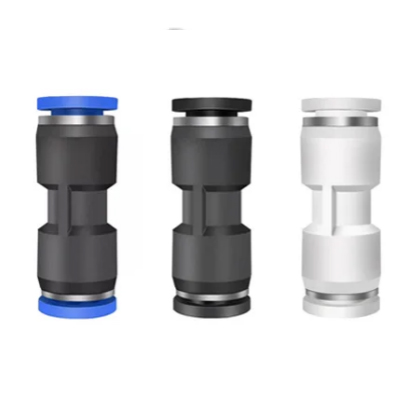
One of the most common questions our engineering team receives is: “Can you reuse push-to-connect pneumatic fittings?” The short answer is an absolute Yes. High-quality push-in air fittings are designed to be reused dozens, if not hundreds, of times.
In this troubleshooting guide, we will uncover the real reason your reused fittings are leaking, explain the hidden mechanics of the internal grab ring, and give you the 3-step rule for perfectly reusing your pneumatic connections every single time.
⚠️ Safety First: The “Bleed Air” Warning
Before we discuss removal techniques, we must address the most critical safety rule in pneumatics: Never attempt to remove tubing from a pressurized system. Push-to-connect fittings utilize the internal air pressure to grip the tubing even tighter. Pulling on a pressurized tube will not only damage the internal grab ring but can also cause the tube to violently whip out, causing severe injury. Always bleed the air pressure to 0 Bar (0 PSI) before attempting to remove any airline.
The Real Culprit: How the Internal Grab Ring Causes “Invisible” Leaks
To understand why a reused fitting leaks, you have to look inside it. A standard push-to-connect fitting relies on two critical internal components:
- The Stainless Steel Grab Ring (Collet): Sharp metal teeth that bite into the plastic tubing to prevent it from blowing out under pressure.
- The NBR O-Ring: A rubber seal sitting further inside the fitting that hugs the smooth surface of the tubing to prevent air from escaping.
When you forcefully pull a tube out of a fitting, those sharp stainless steel teeth drag along the surface of the plastic tubing, leaving deep longitudinal scratches and scoring marks.
If you simply take that scratched tube and push it back into the fitting, the rubber O-ring cannot fill the deep gouges left by the metal teeth. High-pressure air will effortlessly travel down those microscopic scratch channels, bypassing the O-ring completely.
The Verdict: The fitting isn’t leaking—your scratched tubing is.
The 3-Step Rule for Safely Reusing Pneumatic Fittings
To guarantee a leak-free connection when reusing a fitting, you must follow this mandatory 3-step industry standard.
Step 1: The “Push-and-Pull” Removal Technique
Never just yank the tubing out. This will destroy the internal grab ring and severely gouge the tubing. Instead, push the tubing inward slightly. Then, press the plastic release collar evenly against the body of the fitting. Holding the collar down retracts the metal teeth, allowing you to slide the tubing out smoothly with minimal scratching.
Step 2: The 1/2-Inch Cut (And Why Scissors Are the Enemy)
Because the end of the tubing is now compromised by the bite marks of the grab ring, you must cut off the last 1/2-inch (approx. 15mm) of the tubing before re-inserting it.
🔴 STOP! Do not use standard scissors or wire cutters! Using scissors will crush the tubing into an oval shape. When you insert an oval tube into a perfectly round O-ring, it will leak instantly. Furthermore, an angled cut will prevent the tube from seating fully against the internal stop.
✅ The Solution: You must use a professional Pneumatic Tube Cutter. A dedicated tube cutter ensures a perfectly flat, 90-degree cut without crushing the walls of the tubing. This is the single most important tool for ensuring your fittings can be reused safely.
Step 3: Upgrading to Polyurethane (PU) Tubing
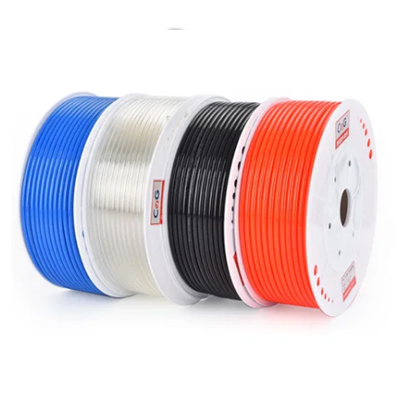
Not all tubing handles reuse equally. Cheap, rigid plastic tubing permanently deforms after one use. For automation systems that require frequent maintenance and tube removal, we highly recommend upgrading to Polyurethane (PU) Tubing. PU tubing has excellent “memory” and flexibility, allowing it to recover its shape better after being gripped by the fitting’s teeth, making it the ideal companion for reusable push-to-connect systems.
When Should You Actually Throw a Fitting Away?
While they are highly reusable, pneumatic fittings do not last forever. You should replace the fitting entirely if you notice any of the following:
- The Release Collar is Broken: If the plastic push-ring is cracked or won’t depress evenly, you can no longer safely release the tubing.
- Missing Grab Ring Teeth: If you look inside and see that the metal teeth are bent or missing (usually caused by violent pulling), the fitting will blow out under pressure.
- Chemical/Heat Degradation: If the fitting has been operating in extreme temperatures or exposed to harsh chemicals for years, the internal NBR O-ring will become brittle and crack. In this case, a new fitting is mandatory.
Conclusion: Stop Blaming the Fitting
The next time you hear a leak after re-assembling a pneumatic circuit, don’t rush to the parts bin for a new fitting. Bleed the air, grab your tube cutter, snip off the damaged half-inch of tubing, and try again.
Are you equipped with the right tools to maintain a leak-free factory?
Explore our professional-grade Pneumatic Tube Cutters, flexible PU Air Tubing, and our complete line of premium, highly-reusable Push-to-Connect Pneumatic Fittings. Stop wasting money on replacing perfectly good parts—invest in the right techniques and the right tools today!